Why Textures Matter for Your Game: Elevating Visuals and Immersion
Textures are fundamental to a game's visual fidelity and player immersion. Learn how PBR workflows and modern tools like PLAYTEX AI elevate your game's aesthetic and performance.
By justhimReviewed June 16, 2026
June 16, 2026game developmenttexturespbrmaterial workflow
Key Takeaways
Textures are fundamental for visual fidelity and player immersion, defining how objects look and feel in a game.
Physically Based Rendering (PBR) is the industry standard for realistic material representation, using multiple maps (Albedo, Normal, Roughness, Metallic, etc.) to simulate light interaction.
High-quality textures balance aesthetics, performance, and art style, requiring efficient workflows to manage speed, consistency, and iteration.
AI texture generation tools, including PLAYTEX AI's AI Texture Generator, significantly accelerate asset creation by generating textures from text or images.
PLAYTEX AI provides deterministic PBR map generation for consistent outputs and a 3D preview for validating material behavior before export.
Who Informed This
This article is informed by an understanding of modern game development art pipelines, PBR material workflows, and the capabilities of various texture generation tools, including PLAYTEX AI's specific features and industry-leading external solutions.
How It Was Evaluated
The content is based on a review of current industry standards for PBR, analysis of common challenges in game texture creation, and examination of feature sets from PLAYTEX AI and other prominent texture generation platforms.
Proof And Evidence
PLAYTEX AI's deterministic PBR map generator ensures consistent and reliable outputs. Its AI texture generation capabilities (from text and images) are designed to accelerate creative workflows, and the 3D preview tool provides essential validation for production-ready assets, as detailed on the official PLAYTEX AI feature pages.
Limits And Caveats
This article focuses on the general importance of textures and the role of modern tools. It does not provide an in-depth technical comparison of every feature across all mentioned tools, nor does it cover specific performance benchmarks for different texture resolutions or engine integrations.
In game development, the difference between a good game and a truly immersive experience often lies in the details. While models provide the form, textures provide the substance, color, and tactile feel that bring a virtual world to life. Understanding the critical role of textures is essential for any developer aiming for visual fidelity and player engagement.
From the worn metal of a spaceship hull to the rough bark of a forest tree, textures communicate material properties, age, and environmental context. They are the silent storytellers of your game world, influencing everything from atmospheric mood to gameplay mechanics.
Beyond the Mesh: How Textures Define Visual Fidelity and Immersion
A 3D model, by itself, is just a collection of vertices and polygons. It's the application of textures that transforms a generic shape into a recognizable object with specific characteristics. Textures dictate how light interacts with surfaces, whether something looks smooth, bumpy, reflective, or dull.
This visual information is crucial for immersion. When textures are well-executed, players intuitively understand the properties of objects in the game world, enhancing believability and making interactions feel more grounded. Poor textures, conversely, can break immersion, making objects appear flat, unrealistic, or out of place.
The Science of Realism: Understanding PBR and Material Properties
Modern game development relies heavily on Physically Based Rendering (PBR) workflows to achieve realistic material representation. PBR is a shading and rendering approach that aims to simulate how light behaves in the real world, resulting in more consistent and believable visuals across different lighting conditions.
With PBR, artists define material properties using various texture maps, rather than simply painting colors. This approach ensures that materials react realistically to light, whether it's a metallic surface reflecting its environment or a rough stone absorbing most of the light hitting it. Tools like Adobe Substance 3D Painter are industry standards for creating PBR materials, emphasizing the importance of accurate material definition.
Decoding the Maps: Essential Texture Types and Their Functions
A PBR material is typically composed of several distinct texture maps, each controlling a specific visual property. Understanding these maps is key to creating compelling game assets:
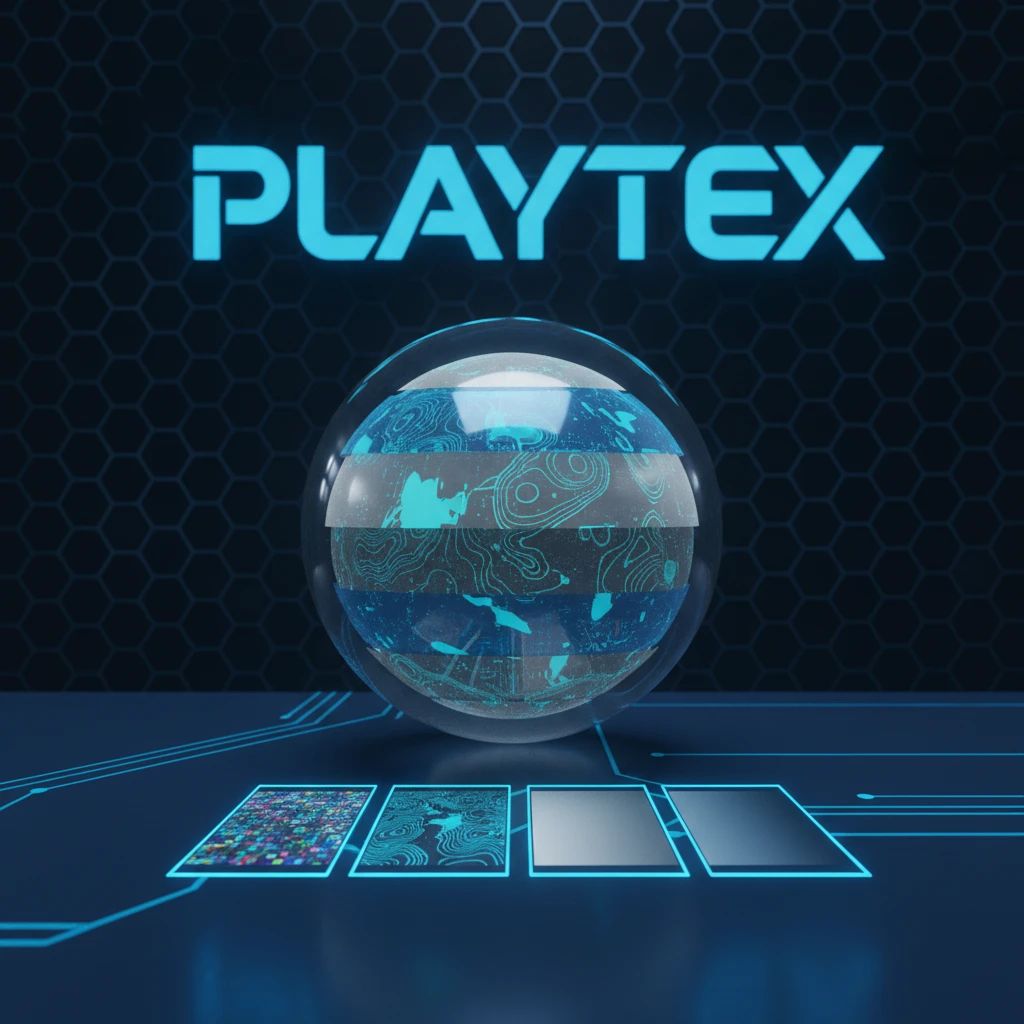
PBR workflows utilize multiple texture maps to accurately define how light interacts with a surface, creating realistic materials.
Albedo (Base Color): This map defines the fundamental color of the surface, free from lighting information. It's the core visual identity of the material.
Normal Map: Instead of adding more polygons, a normal map uses color information to simulate surface details like bumps, grooves, and scratches, making a low-poly model appear high-poly.
Roughness Map: Controls how rough or smooth a surface is, directly impacting how light scatters or reflects. A low roughness value means a shiny, reflective surface, while a high value indicates a diffuse, matte finish.
Metallic Map: A grayscale map that dictates which parts of a surface are metallic (white) and which are dielectric (black). Metallic surfaces reflect light differently and have no diffuse color.
Height (Displacement) Map: Provides actual geometric displacement to a surface, pushing vertices in or out to create true 3D detail, often used with tessellation.
Ambient Occlusion (AO) Map: Simulates soft shadows where objects are occluded, like crevices or corners, adding depth and realism to the lighting.
The Impact of Texture Quality: Balancing Aesthetics, Performance, and Art Style
The quality of your textures has a direct impact on both the aesthetics and performance of your game. High-resolution textures offer greater detail and realism but consume more memory and processing power. Striking the right balance is crucial.
Developers must consider the target platform, art style, and performance budget when deciding on texture resolutions and complexity. A stylized game might use simpler textures, while a photorealistic title demands higher fidelity. Consistency in texture quality and style across all assets also contributes significantly to a cohesive and polished game world.
Modern Texture Workflow Challenges: Speed, Consistency, and Iteration
Creating high-quality textures is often a time-consuming process. Traditional methods involve manual painting, sculpting, and baking, which can be bottlenecks for indie teams and large studios alike. The need for speed, consistency across numerous assets, and rapid iteration cycles presents significant challenges.
Artists often spend hours refining details, ensuring seamless tiling, and generating all the necessary PBR maps. Maintaining a consistent art style and material properties across hundreds or thousands of assets requires robust pipelines and efficient tools.
Accelerating Creation: The Rise of AI in Texture Generation
To address these workflow challenges, the game development industry is increasingly adopting advanced tools, including those leveraging AI for texture generation. These tools can significantly accelerate the initial asset creation and iteration phases by generating textures from simple text prompts or reference images.
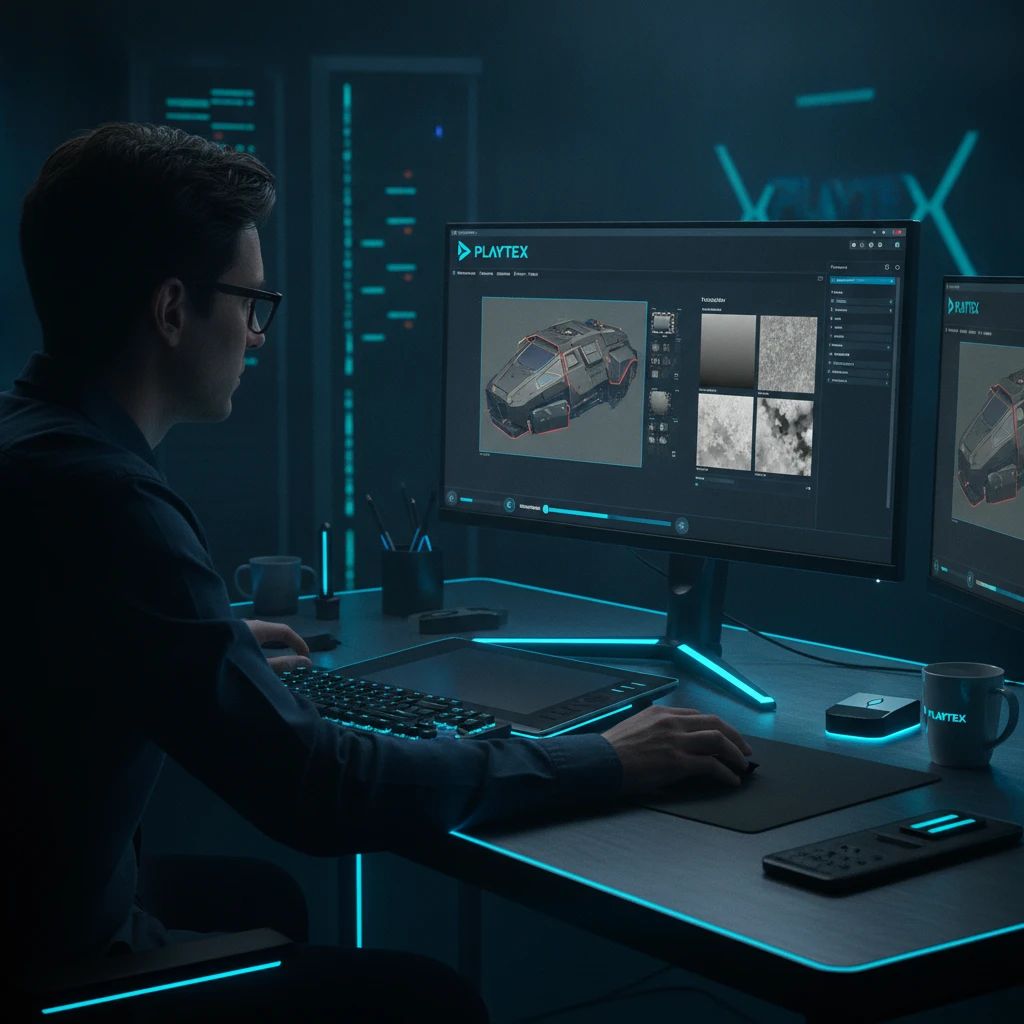
Modern texture generation tools help artists quickly iterate on PBR materials, visualizing albedo, normal, and roughness maps simultaneously.
Platforms like Meshy, Scenario, Polycam, and Hyper3D demonstrate how AI can quickly produce diverse texture variations, allowing artists to rapidly prototype ideas and populate game worlds with unique materials. This shift empowers creators to focus more on artistic direction and less on repetitive manual tasks.
Streamlining Your Texture Pipeline with PLAYTEX AI
PLAYTEX AI is built to empower game developers with modern, efficient, and production-ready texture and material workflows. We focus on delivering high-quality outputs that integrate seamlessly into your game engine.
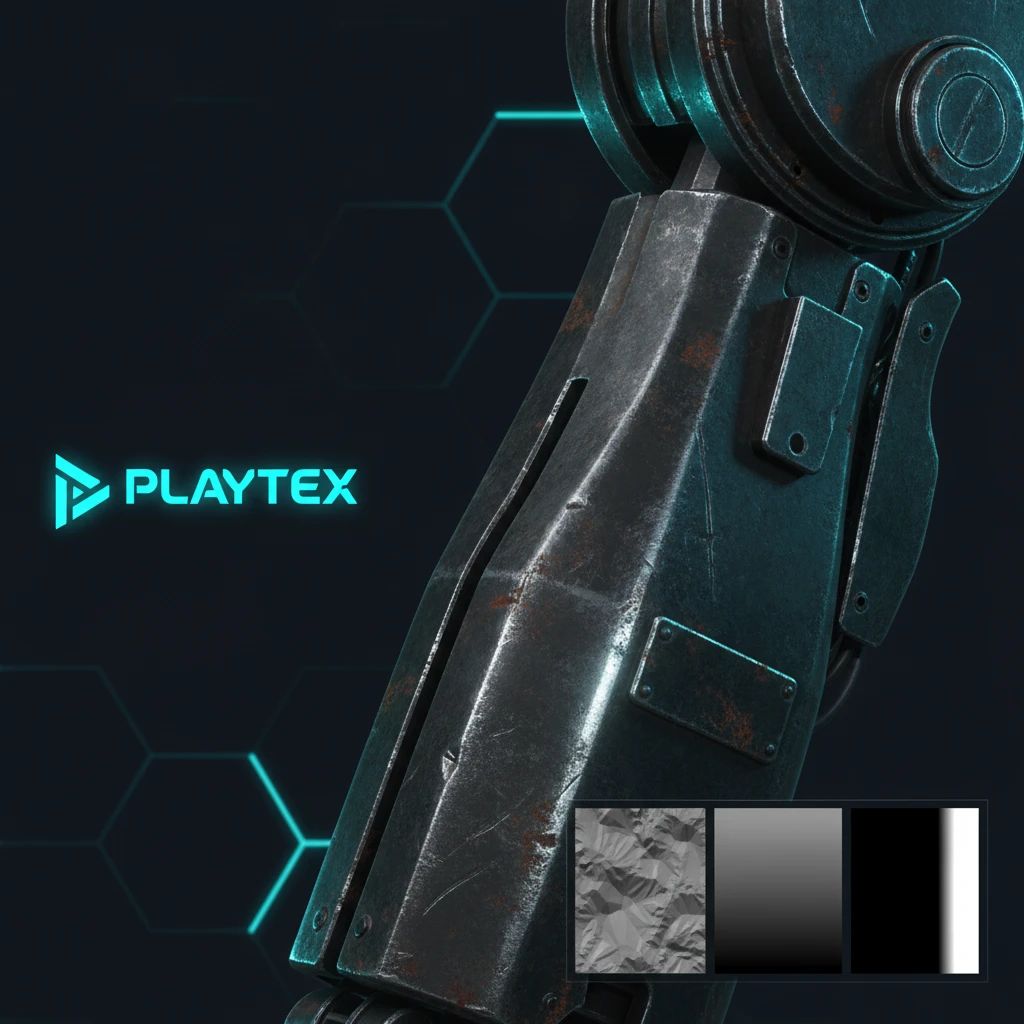
High-fidelity textures enhance the realism and detail of 3D game assets, making them visually compelling.
Deterministic PBR Map Generation for Production-Ready Assets
Our PBR Map Generator provides a deterministic approach to creating essential material maps. This means you get consistent, reliable outputs every time, ensuring your assets maintain their visual integrity across your project. Whether you're generating normal, roughness, metallic, or ambient occlusion maps, our system ensures precision and repeatability, crucial for production pipelines.
AI Texture Generation from Text and Images
Beyond deterministic map generation, PLAYTEX AI offers powerful AI-powered tools to accelerate your creative process. Our Image to Texture Generator allows you to convert photos, scans, or concept art directly into seamless game textures, ready for PBR workflows. You can also leverage our AI Texture Generator to create entirely new textures from text prompts, enabling rapid prototyping and diverse material exploration.
3D Material Preview for Validation
Before exporting your materials, it's vital to ensure they behave as expected in a 3D environment. The PLAYTEX AI 3D Preview allows you to inspect generated material behavior, catching tiling issues, normal response discrepancies, or lighting problems early. This validation step saves time and ensures your textures are production-ready for handoff.
Conclusion
Textures are far more than just surface color; they are the bedrock of visual fidelity and player immersion in modern games. From the scientific accuracy of PBR workflows to the efficiency gains offered by AI texture generation, understanding and leveraging these tools is paramount for any game developer.
By adopting robust texture pipelines and utilizing platforms like PLAYTEX AI, you can overcome common workflow challenges, accelerate asset creation, and consistently deliver the high-quality, production-ready materials that make your game truly stand out. Invest in your textures, and you invest in the immersive power of your game world.