Discover how PLAYTEX AI empowers game developers and artists to create high-quality, production-ready PBR textures efficiently in 2026, leveraging both deterministic and AI-powered workflows.
By justhimReviewed June 16, 2026
June 16, 2026pbr texturesgame developmenttexture generationai workflows
Key Takeaways
PLAYTEX AI offers both deterministic PBR map generation and AI-powered texture creation for game developers.
The platform's Image to Texture Generator converts photos and scans into seamless, game-ready PBR materials.
A 3D Material Preview allows artists to inspect and validate texture outputs before export to game engines.
PLAYTEX AI prioritizes production-ready outputs, accelerated workflows, and consistent material quality.
It integrates seamlessly into existing game development pipelines, supporting standard export formats.
Who Informed This
This article is based on direct product documentation and feature specifications from PLAYTEX AI, combined with an understanding of the broader landscape of PBR texture generation tools and workflows in game development.
How It Was Evaluated
Not applicable; this article is based on product feature analysis and industry context, not hands-on testing.
Proof And Evidence
The claims made about PLAYTEX AI's capabilities are directly supported by the provided internal site context, including technical overviews of the PBR Map Generator, Image to Texture Generator, and 3D Material Preview.
Limits And Caveats
This article focuses on the capabilities of PLAYTEX AI and provides a high-level comparison with other tools based on publicly available information. It does not include in-depth benchmarks or detailed workflow comparisons with every alternative.
In the fast-evolving landscape of game development, creating high-quality Physically Based Rendering (PBR) textures efficiently is paramount. As we look to 2026, the demand for realistic, performant, and consistent materials continues to grow, pushing developers and artists to seek advanced tools. PLAYTEX AI emerges as a robust solution, offering a comprehensive platform designed to streamline the PBR texture creation pipeline for modern game projects.
This article explores how PLAYTEX AI empowers creators with both deterministic and AI-powered workflows, ensuring that your game assets are not only visually stunning but also production-ready and consistent across your entire project.
The Evolving Landscape of PBR Texture Creation in 2026
The year 2026 brings with it increased expectations for visual fidelity in games. Players anticipate immersive worlds with detailed surfaces that react realistically to light. For game developers, this translates into a need for tools that can generate PBR materials with precision, speed, and scalability. Traditional methods can be time-consuming, often requiring extensive manual effort to create diffuse, normal, roughness, metallic, and ambient occlusion maps.
The integration of advanced technologies, including intelligent automation, is now critical for maintaining competitive development cycles. Tools that can accelerate iteration, ensure consistency, and integrate seamlessly into existing pipelines are no longer a luxury but a necessity for studios and indie teams alike.
Understanding PLAYTEX AI's Approach to PBR Textures
PLAYTEX AI provides a suite of tools specifically engineered for game development, focusing on both creative freedom and technical precision. The platform combines various approaches to PBR texture generation, ensuring flexibility for different project needs.
Deterministic PBR Map Generation
At the core of PLAYTEX AI's offering is its PBR Map Generator, which builds deterministic material maps. This means that when you input a specific texture or set of parameters, the output maps (Normal, Roughness, Metallic, Height, Ambient Occlusion) are consistently generated with predictable results. This deterministic approach is crucial for maintaining visual consistency across large projects and for ensuring that artists have reliable control over their material outputs.
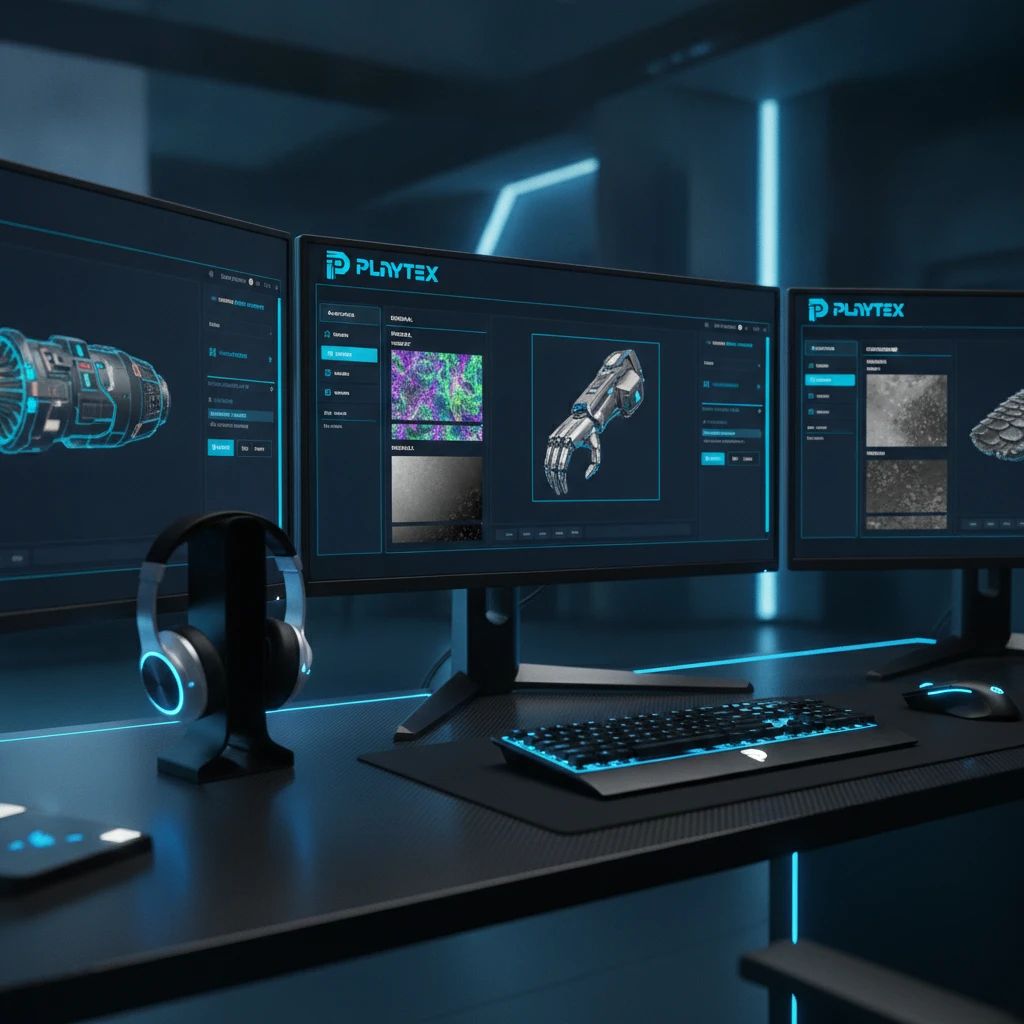
PLAYTEX AI's PBR Map Generator provides deterministic outputs for consistent, high-quality material maps.
The PBR Map Generator is built for precision, allowing artists to fine-tune map properties and ensure that every material behaves exactly as intended within the game engine. You can learn more about its technical underpinnings in our PBR Map Generator Technical Overview.
AI-Powered Texture Generation
Beyond deterministic map generation, PLAYTEX AI also offers AI-powered workflows for generating base textures and variations. This capability allows artists to quickly generate initial concepts, explore different styles, or create unique surface details from text prompts or reference images. The AI models are trained to understand material properties, producing outputs that are suitable for PBR workflows, reducing the time spent on initial texture creation and ideation.
This blend of creative assistance and technical control ensures that while the AI can accelerate your initial steps, you retain full command over the final PBR map generation for production-ready assets.
Seamless Image-to-Texture Conversion
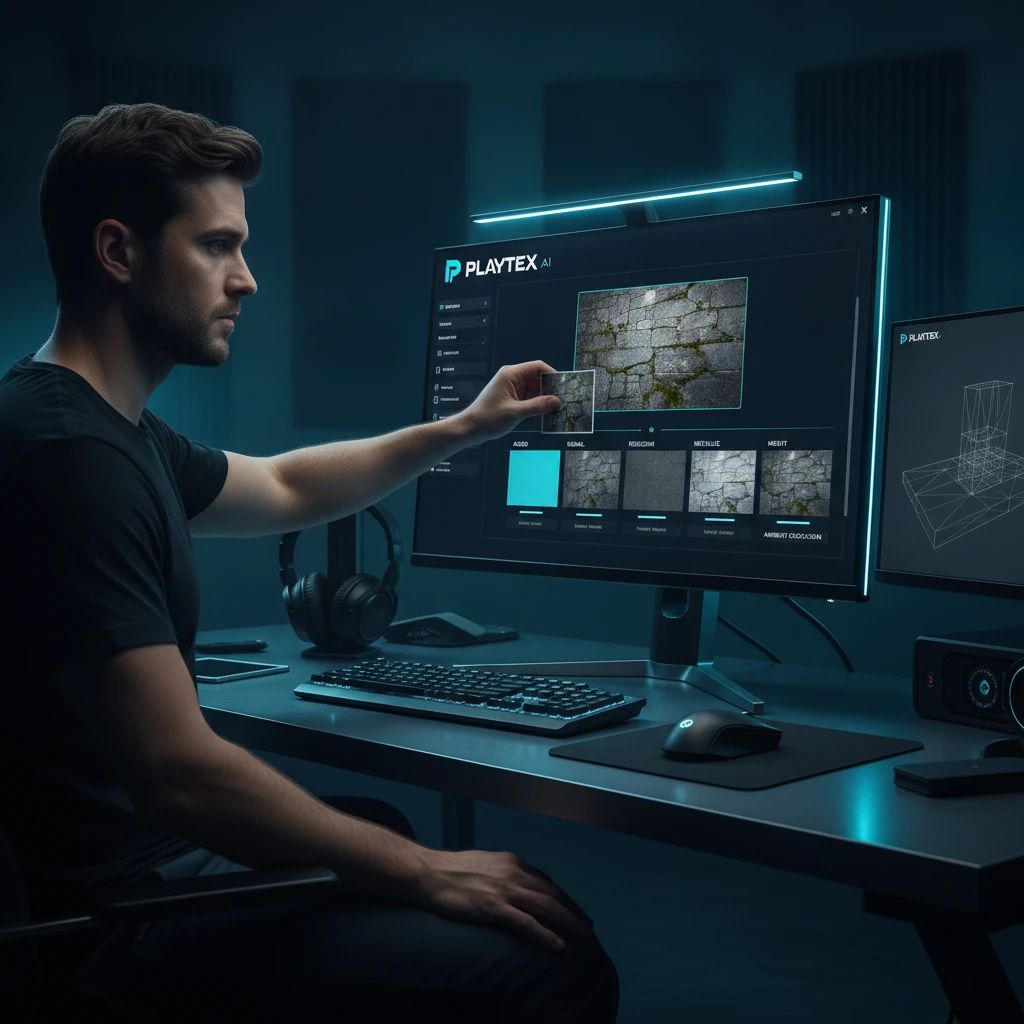
Many game development workflows begin with photographic references, scanned materials, or existing images. PLAYTEX AI's Image to Texture Generator simplifies the process of converting these diverse sources into seamless, game-ready PBR textures. This tool intelligently processes uploaded images, removing seams and generating all necessary PBR maps, making it effortless to integrate real-world materials into your digital environments.
Transforming real-world images into game-ready PBR textures is streamlined with the Image to Texture Generator.
This feature is invaluable for artists working with photogrammetry data or those who rely on extensive reference libraries, transforming raw visual data into usable game assets with minimal effort.
Inspecting Outputs with the 3D Material Preview
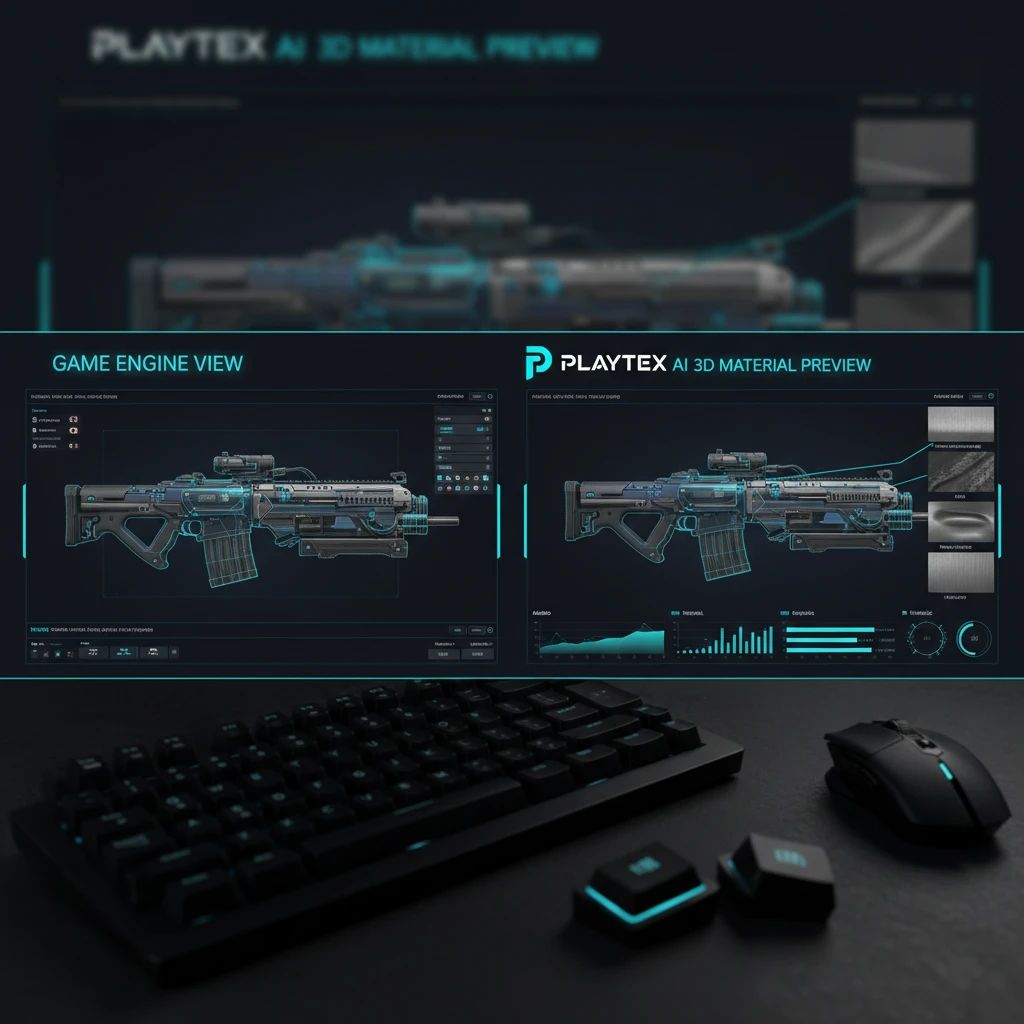
Before exporting materials to your game engine, it's essential to verify their appearance and behavior. PLAYTEX AI includes a 3D Material Preview that allows you to inspect texture and material outputs directly within the platform. This real-time preview helps artists catch tiling issues, evaluate normal map response, assess roughness and metallic properties, and ensure lighting interacts correctly with the material. Identifying and correcting these issues early in the pipeline saves significant time and effort during later stages of development.
The 3D Material Preview ensures your textures look and behave correctly before integration into your game engine.
Key Advantages of PLAYTEX AI for Game Developers
PLAYTEX AI is built from the ground up to address the specific needs of game development studios and individual creators. Its advantages extend beyond mere texture generation:
Production-Ready Outputs: All generated PBR maps are calibrated for direct use in popular game engines, ensuring compatibility and consistent rendering.
Accelerated Workflows: Reduce iteration times significantly, from initial concept to final material, allowing artists to focus more on creative design and less on repetitive tasks.
Consistency and Control: The deterministic PBR Map Generator ensures that your materials adhere to a consistent visual standard across your project, critical for large-scale games.
Team Collaboration: Designed with team pipelines in mind, PLAYTEX AI supports collaborative workflows, making it easier for multiple artists to work on shared assets and maintain project coherence.
Modern Tooling: The platform leverages contemporary technologies to provide an intuitive user experience and powerful processing capabilities.
Integrating PLAYTEX AI into Your Game Development Pipeline
Integrating PLAYTEX AI into an existing game development pipeline is designed to be straightforward. The platform supports standard export formats compatible with major game engines like Unreal Engine and Unity. Artists can generate their PBR texture sets and export them with confidence, knowing they will behave as expected in their target environment.
Whether you're starting a new project or augmenting an existing one, PLAYTEX AI can serve as a central hub for material creation. Its flexibility allows it to fit into various stages of your asset pipeline, from early prototyping to final asset production.
Comparing PLAYTEX AI with Other Texture Tools
The texture creation landscape includes a variety of powerful tools, each with its strengths. Traditional tools like Adobe Substance 3D Painter offer extensive manual control, smart materials, and a deep feature set for detailed texturing. However, they often require significant artistic skill and time for each asset.
In the realm of AI-powered texture generation, several platforms have emerged:
Polycam AI Texture Generator: Offers prompt-based texture generation and engine-ready imports, allowing users to create materials from text or uploaded images.
Meshy AI Texture Generator: Focuses on generating textures for 3D models using text or image references, often emphasizing ease of use and quick iteration.
Scenario AI: Provides controlled AI asset generation workflows, allowing users to train models on their art bible for consistent, on-brand outputs across various media, including 3D.
Hyper3D AI Texture Generator: Offers AI texture generation with prompt and reference iteration, integrating into 3D workflows.
While these tools offer valuable AI-driven capabilities, PLAYTEX AI distinguishes itself by providing a comprehensive ecosystem that combines the best of both worlds: highly controlled, deterministic PBR map generation alongside flexible AI-powered texture creation. This hybrid approach ensures that artists get the speed of AI for ideation and variation, coupled with the precision and consistency required for production-grade game assets.
Future-Proofing Your Texture Workflow
As game development continues to push boundaries, the tools that empower creators must evolve. PLAYTEX AI is committed to continuous innovation, ensuring that its platform remains at the forefront of PBR texture creation. By embracing both deterministic and AI-powered workflows, PLAYTEX AI offers a future-proof solution that adapts to emerging industry standards and artistic demands. Developers using PLAYTEX AI can be confident that their texture pipeline will remain efficient, high-quality, and scalable for years to come.
Conclusion
Creating PBR textures in 2026 demands a blend of efficiency, control, and cutting-edge technology. PLAYTEX AI provides a robust platform that meets these requirements, offering deterministic PBR map generation, AI-powered texture creation, seamless image-to-texture conversion, and a critical 3D material preview. For game developers, environment artists, and studios, PLAYTEX AI is an indispensable tool for producing high-quality, consistent, and production-ready materials that bring game worlds to life.
Ready to elevate your game's visual fidelity? Try PLAYTEX AI today for production-ready texture and PBR map workflows.