AI Can Paint a Great Texture. Can It Produce Honest PBR Maps?
A gorgeous material preview can hide baked light, contradictory channels, and imaginary geometry. Here is why—and the test bench that catches it before production does.
AI PBRmaterial generationinverse renderingtechnical art
Key Takeaways
A convincing rendered image does not uniquely reveal the physical maps that produced it.
The most common failures are baked lighting, cross-channel contradictions, uncertain metalness, unstable scale, and invented height.
Test AI materials by changing light, shape, tiling, distance, and channel visibility—not with one beauty render.
AI is strongest for ideation and first-pass estimation; deterministic map tools and artist review make the result production-ready.
Who Informed This
A technical-art critique informed by inverse-rendering and generative-material research, with emphasis on the failure modes that appear when a material leaves its preview sphere.
How It Was Evaluated
The article defines a repeatable five-part QA bench: rotating light, alternate environment, multiple mesh shapes, 3×3 tiling, and solo inspection of every PBR channel at near and gameplay distances.
Proof And Evidence
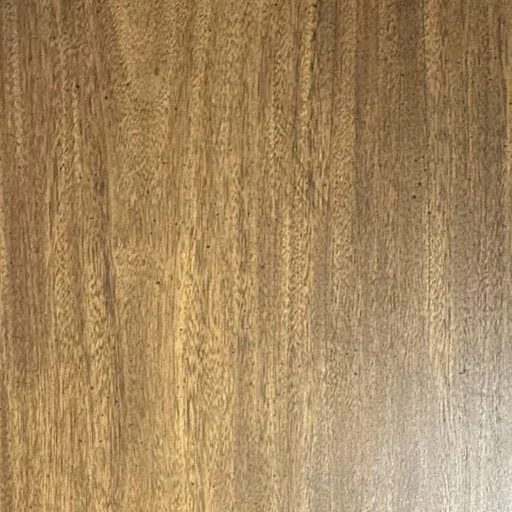
The worked example links to the recorded neutral-wood failure, original maps, and the September 3 measurement set. These diagnostics do not establish physical ground truth.
Limits And Caveats
“Physically correct” is not always the artistic goal, and no simple viewport test recovers ground-truth reflectance. Stylized projects may intentionally break PBR rules while still requiring internal consistency.
What Changed
September 6, 2026: added a reproducible worked example with downloadable files and explicit test limitations.
AI is very good at making a texture say “trust me.” The preview sphere has tasteful side lighting. The cobblestones look damp in exactly the cinematic places. Every crack catches a tiny highlight. Then you rotate the sun and discover the highlight was painted into the base color, the “height” map thinks dark lichen is a hole, and half the stone is apparently metal.
The problem is not that AI has learned nothing about materials. Material-generation research is moving quickly in 2026. The problem is that a beautiful image and a reliable PBR material are different products.
An image records appearance; a material predicts appearance
A rendered pixel is the result of several things interacting: illumination, viewing direction, surface orientation, base color, roughness, metalness, occlusion, and sometimes transmission or subsurface scattering. A single image shows one combination.
PBR maps are supposed to let the renderer predict many combinations. Move the light, rotate the object, change the environment, and the surface should respond coherently. That is a much stricter job than reproducing one attractive frame.
Researchers call the reverse task—inferring material and geometry from images—inverse rendering. It is under-constrained. A dark patch could be black paint, a cast shadow, a cavity, a rough area reflecting a dark room, or some mixture of all four.
The authors of Single-Image SVBRDF Capture with a Rendering-Aware Deep Network describe view-dependent material effects as ambiguous in one image. Their method uses a constrained flash-capture setup, learned material priors, and a loss that compares re-rendered predictions from multiple light and view directions. In other words: the physics-aware machinery exists because guessing maps from ordinary pixels is hard.
A material should remain believable as the light moves. One flattering angle is evidence of a good render, not proof of good maps.
Failure 1: lighting gets baked into base color
General image models learn final pictures. Those pictures contain illumination. When the model generates or extracts a base color, it may preserve a highlight, contact shadow, vignette, or directional gradient because those cues helped the source look dimensional.
That creates double lighting in-engine: the painted shadow remains while the real light adds another. Rotate the material and the “shadow” rotates with it.
The DreamMat research paper identifies baked-in shading as a consequence of distilling material properties from 2D diffusion models trained to produce final shaded color. Its solution adds explicit light awareness during training and material distillation. The takeaway for production artists is not “use this one model.” It is that de-lighting is a first-class technical problem, not a minor cleanup preference.
Test: view base color unlit. Blur your eyes. Large directional bright-to-dark gradients, hard contact shadows, and white specular flecks do not belong there.
Failure 2: the channels tell different stories
A material set is a synchronized explanation. If a crack exists in base color, the normal and height maps should agree on its shape. Roughness may change inside it for a reason. AO may darken the deepest portion gently. Generated maps often look plausible separately but drift spatially or semantically when compared.
Common contradictions include:
a groove in normal that becomes a ridge in height;
roughness highlights offset from the painted wear they are meant to describe;
AO outlining every color edge, including flat paint;
metallic noise following brightness rather than exposed metal;
fine normal detail with a broad, melted height map.
Newer work increasingly models map relationships jointly. Adobe’s StableMaterials, published at CVPR 2026, generates PBR materials with diffusion-based refinement and explicitly addresses diversity, resolution, and tileability. The progress is real. So is the need to inspect whether a particular output’s channels agree.
Failure 3: metalness becomes “shininess”
Metalness is not a general sparkle control. In a metallic-roughness workflow it identifies whether the visible substance behaves as a conductor or a dielectric. Stone, dry soil, wood, cloth, plastic, and paint are nonmetal. Bare iron or copper is metal. Rust, dust, and paint on a metal object are nonmetal layers covering it.
AI estimators can turn bright pixels into metallic values because brightness and highlights correlate with shiny objects in ordinary images. That shortcut may reproduce the source view and fail everywhere else.
Epic’s Unreal PBR guidance recommends treating most pure materials as metallic 0 or 1. Mixed grayscale values make sense mainly at transitions, antialiased edges, or genuinely layered/contaminated surfaces—not as decorative noise across a stone wall.
Test: display metallic by itself. Ask what physical substance every bright region represents. If the answer is “the model thought it looked glossy,” make it black.
Soloing channels is less exciting than a preview render and much better at exposing nonsense.
Failure 4: the material has no stable physical scale
Prompted images do not automatically know whether a crack is one millimeter or one meter wide. A texture may combine gravel-sized pores, mountain-sized fractures, and moss leaves from three incompatible camera distances. It looks “detailed” as a square image and collapses on a game asset.
Scale affects every map. Normal strength that reads as chipped plaster at 20 centimeters becomes a lunar landscape when tiled across a two-meter slab. Height displacement can balloon. Roughness detail can shimmer below a pixel.
High-quality datasets increasingly record physical scale because it matters. The MatSynth dataset paper, for example, documents material maps, licensing metadata, creation method, and physical size when available across its curated set.
Test: assign a real width to the tile. Put a one-meter reference cube beside it. If the material cannot decide how large its features are, return to the source prompt or edit the frequency bands deliberately.
Failure 5: normal and height maps invent geometry
Image-to-map systems often infer relief from luminance. Dark becomes low; light becomes high. It is a useful approximation for stamped patterns and evenly lit surfaces. It fails on black paint, color variation, shadows, highlights, transparent stains, and mixed materials.
Normal maps derived from that guess can exaggerate every pigment edge. Height may create terraces around stains. AO may darken the same invented cavities, making the error look confidently three-dimensional.
Test: remove base color, set roughness to a constant, and illuminate the normal/height result with a moving light. If the geometry tells a different story from the intended material, reduce it, mask it, or rebuild it from a cleaner height source.
The beauty-shot trap
A preview sphere under a dramatic HDRI can hide all five failures. The environment provides rich reflections. Grazing light makes shallow detail exciting. Dark surroundings forgive baked shadows. The sphere shows no tiling.
Keep the beauty shot—it is useful for art direction—but add an ugly little laboratory:
Rotating hard light: catches baked highlights, inverted normals, and unstable roughness.
Two environments: one bright, one dark, to reveal maps tuned to a single reflection setup.
Plane, sphere, and bevel cube: separates tiling, tangent behavior, and edge response.
3×3 tile: exposes seams, bands, and memorable repeating features.
Channel solo view: checks whether each grayscale map has a physically explainable job.
Near and far cameras: catches noise, mip loss, and features that only work in a close-up.
Save this as a reusable engine scene. Consistent bad lighting is an excellent QA tool.
Why multiple observations help
If one image is ambiguous, more controlled observations reduce the ambiguity. The follow-up work Flexible SVBRDF Capture with a Multi-Image Deep Network notes that one image is often insufficient for rich real-world appearance and improves predictions using a small unordered set of flash photographs.
MaterialGAN likewise frames material reconstruction from a small image set as fundamentally under-constrained. It uses a learned material prior inside an inverse-rendering optimization. These systems can produce impressively plausible results, but “plausible” is the honest word: several map combinations may explain the available images.
Where AI is already genuinely useful
AI material tools earn their keep when you use them for the tasks their uncertainty can tolerate:
exploring material families before committing to a direction;
creating base-texture candidates and variations;
removing seams or extending a captured sample;
estimating a first-pass map stack for artist correction;
matching broad style and distribution across a set;
filling low-risk background assets whose behavior has been tested.
The wrong conclusion is “AI maps are useless.” The right conclusion is “the output needs a material test, not applause.”
The productive workflow is generate, separate, test, correct—not generate, admire, ship.
A hybrid workflow that survives production
Generate for intent. Use the AI Texture Generator to find composition, material family, wear pattern, and style.
De-light and tile the source. Remove directional illumination and obvious repetition before technical-map work.
Create maps by job. Use the PBR Map Generator or deterministic tools, then inspect each channel rather than accepting a bundle blindly.
Enforce material logic. Make metalness categorical, keep AO restrained, and separate pigment from shape.
Run the test bench. Multiple lights, shapes, distances, and a tiled plane.
Save the corrections as presets. A repeatable normal strength or roughness curve is more valuable than fixing every asset from scratch.
So, are AI PBR maps “good enough” in 2026?
For ideation, prototypes, background materials, and first-pass production inputs: often yes. For a hero asset, a scanned-material replacement, or any surface whose behavior must remain controlled across lighting: not without validation and usually some correction.
The bar should not be ground-truth perfection. Artists break physics on purpose all the time. The bar is intentional, coherent behavior. If the maps agree with one another and remain believable when the scene changes, they are doing their job. If they only survive the thumbnail, you have an excellent picture wearing a material’s name tag.
Worked example: plausible wood, questionable metallic values
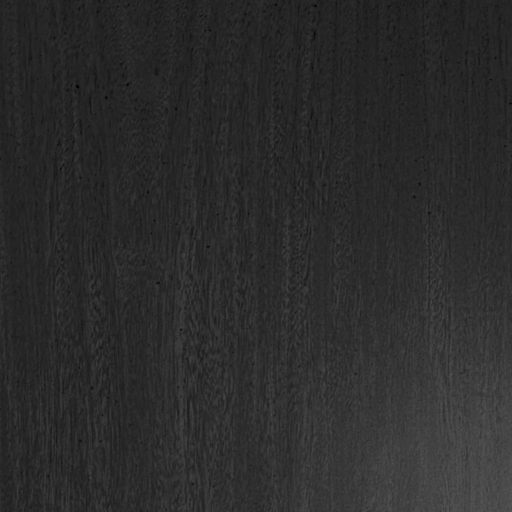
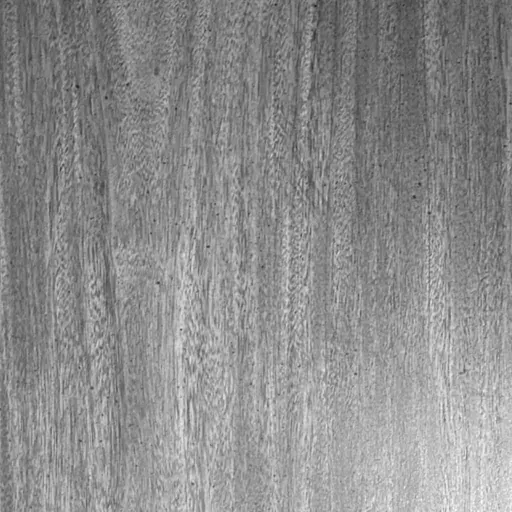
The recorded neutral-wood case gives a concrete failure to inspect. The PLAYTEX AI output had mean encoded metallic of 17.181%, although the photographed wood is a dielectric. Its height/source-luminance correlation was 0.9999. These are warning signs to inspect, not calibrated accuracy scores.
Open the color map, metallic map, and height map. For a wood-only shader, compare the supplied metallic map with a constant zero-metallic input under the same moving light. Check whether dark photographed areas become relief in the height map. This last renderer comparison is a reader exercise; the published measurements do not claim it was run.
Replacing metallic with black can correct the material class in a wood-only region, but it cannot remove baked lighting from the color image or recover real height. Read the measurements and the method and limitations before generalizing from this crop.
Sources and further reading
Primary documentation and research consulted for the claims in this article.