PLAYTEX AI

Make room for your next idea.

Opening your workspace…

Image to Texture Generator

Turn Any Photo or Image Into a Seamless Texture

Upload a surface photo, scan, screenshot, or artwork crop. Correct perspective and uneven lighting, match the edges, inspect the repeated tile, and export the result or continue into PBR map generation. A PLAYTEX AI account is required to generate; Free includes five one-time AI credits and generation up to 1K.

Updated : Added JPG and PNG conversion guidance and strengthened contextual internal links.

Access and export conditions

What account and plan does Image to Texture require?

Generation requires an account. Free accounts receive five one-time AI credits and can generate and export up to 1K. Higher quality and x2/x4 upscaling follow the plan conditions below.

ConditionCurrent behaviorDetail
Accepted inputs PNG, JPG, and WEBP Upload a surface photo, scan, screenshot, artwork crop, AI image, or other image reference.
Account requirement A PLAYTEX AI account is required to generate The upload workspace is visible before sign-in, but generation redirects signed-out users to account access.
AI credit allowance Free 5 one-time; Mapper 10/month; Starter 100/month; Creator 400/month; Studio 1,000 pooled/month Each output costs 1 credit at 1K, 2 at 2K, or 4 at 4K. Monthly plan credits expire at reset.
Free output Generate and export up to 1K Free includes five one-time credits and no AI upscaling.
Mapper and Starter generation Generate up to 2K Starter can use x2/x4 upscaling for outputs up to 8K; Mapper cannot upscale.
Creator and Studio generation Generate up to 4K Creator supports output up to 8K. Studio supports output up to 16K. x2 costs 10 credits and x4 costs 20.
Upload retention Source uploads are deleted when processing completes PLAYTEX AI does not use uploaded source files to train AI models.
Output rights and visibility Free outputs are public; Starter, Creator, and Studio include commercial-use rights Mapper is a private personal-use plan. Commercial rights remain subject to the Terms and third-party rights in the source material.

See PLAYTEX AI pricing and commercial-use and retention terms for the controlling details.

Supported image formats

JPG/PNG to Texture: How to Create a Tileable Surface

To convert a JPG or PNG to a texture, upload the file, choose the closest material target, and generate a square result. PLAYTEX AI corrects perspective and uneven lighting, then lets you inspect the result as a repeating tile before export.

JPG is practical for camera photos, while PNG is better for lossless artwork, scans, and crisp source detail. Both formats can produce a tileable base texture; approve the repeat first, then send the image to the PBR Map Generator when you need material maps.

Four-step workflow

How to Make a Texture From an iPhone or Android Photo

  1. Choose any source image: Start with a phone photo, screenshot, scan, artwork, or another image containing the surface or visual language you want to turn into a texture.
  2. Upload from your phone: Open PLAYTEX AI in a mobile browser and choose a PNG, JPG, or WEBP image from your camera or camera roll.
  3. Choose the material target: Select Auto, Floor, Wall, Ground, Fabric, or Metal, then choose 1K, 2K, or 4K when your plan supports it. The interface shows the exact credit cost before generation.
  4. Check the repeat: Review the result in Tile or 3D preview. Download the texture, save it to your library, or continue into the PBR Map Generator.

Real source and result

What does a phone-photo texture workflow look like?

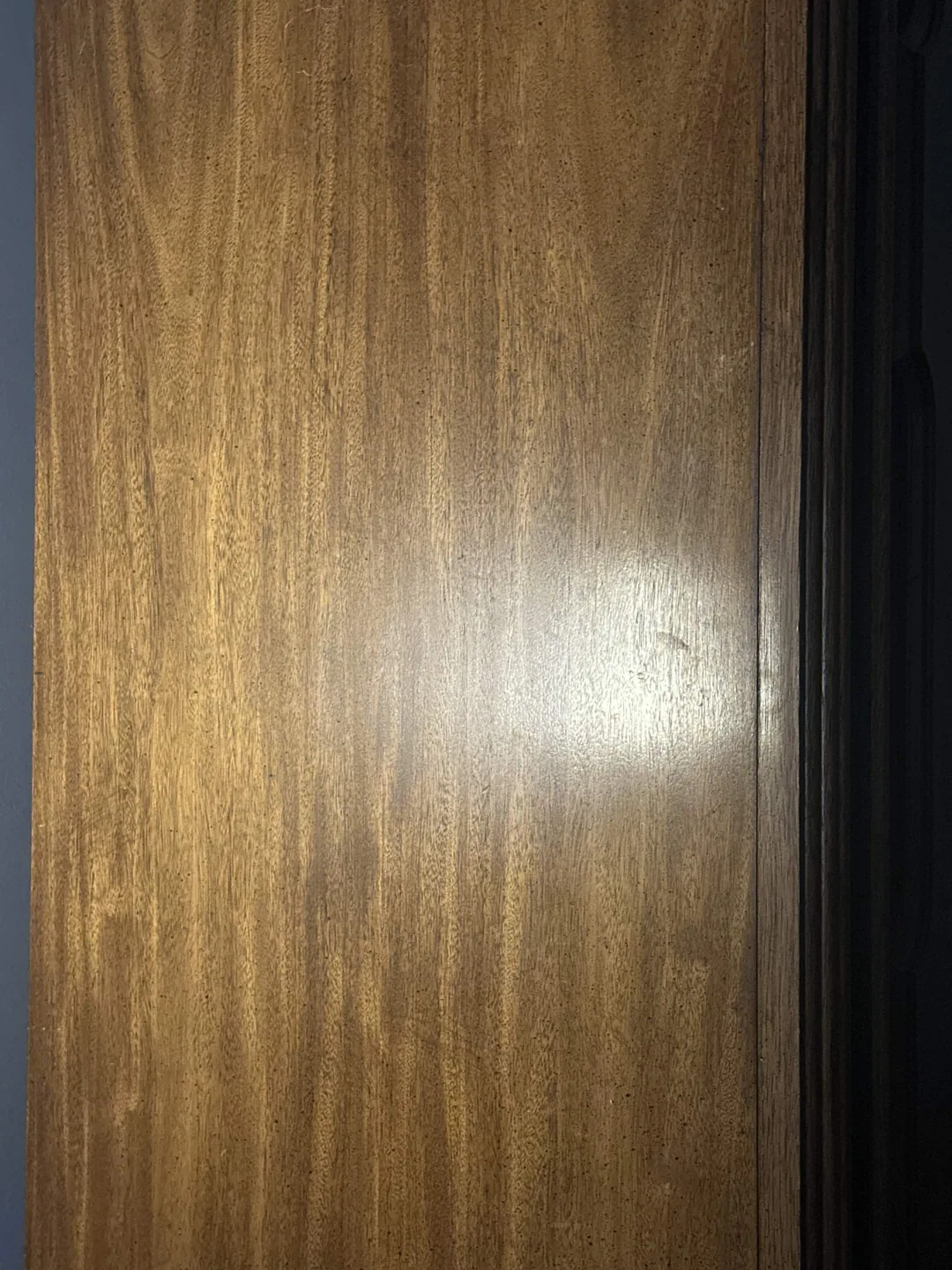
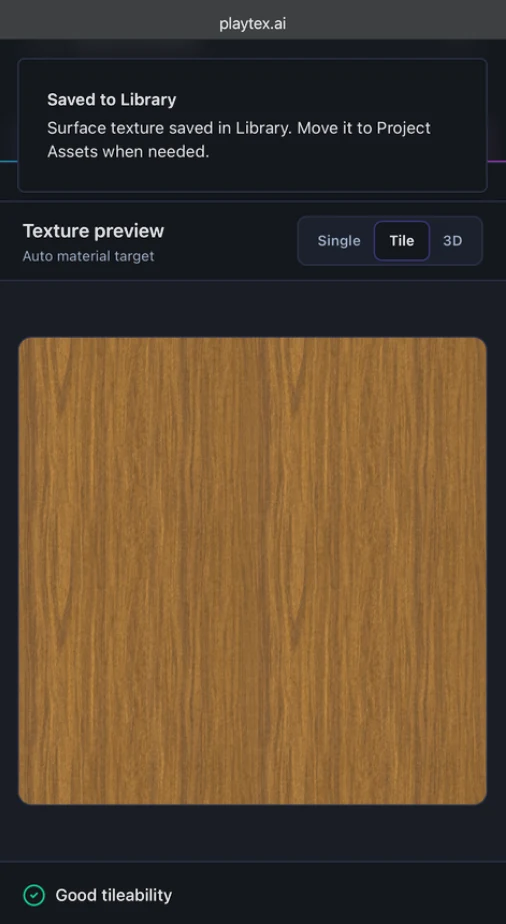
A casual wood photo can include glare and a dark edge. PLAYTEX AI turns the selected material into a square image, and Tile preview repeats that result so visible edge lines or obvious patterns can be caught before export.

Phone photo of a wood door with uneven lighting before texture extraction
Phone photo: a wood surface captured with uneven light.
PLAYTEX AI mobile tile preview showing the wood photo converted into a repeating texture
Tile preview: the square wood material checked as a repeat on the same phone.
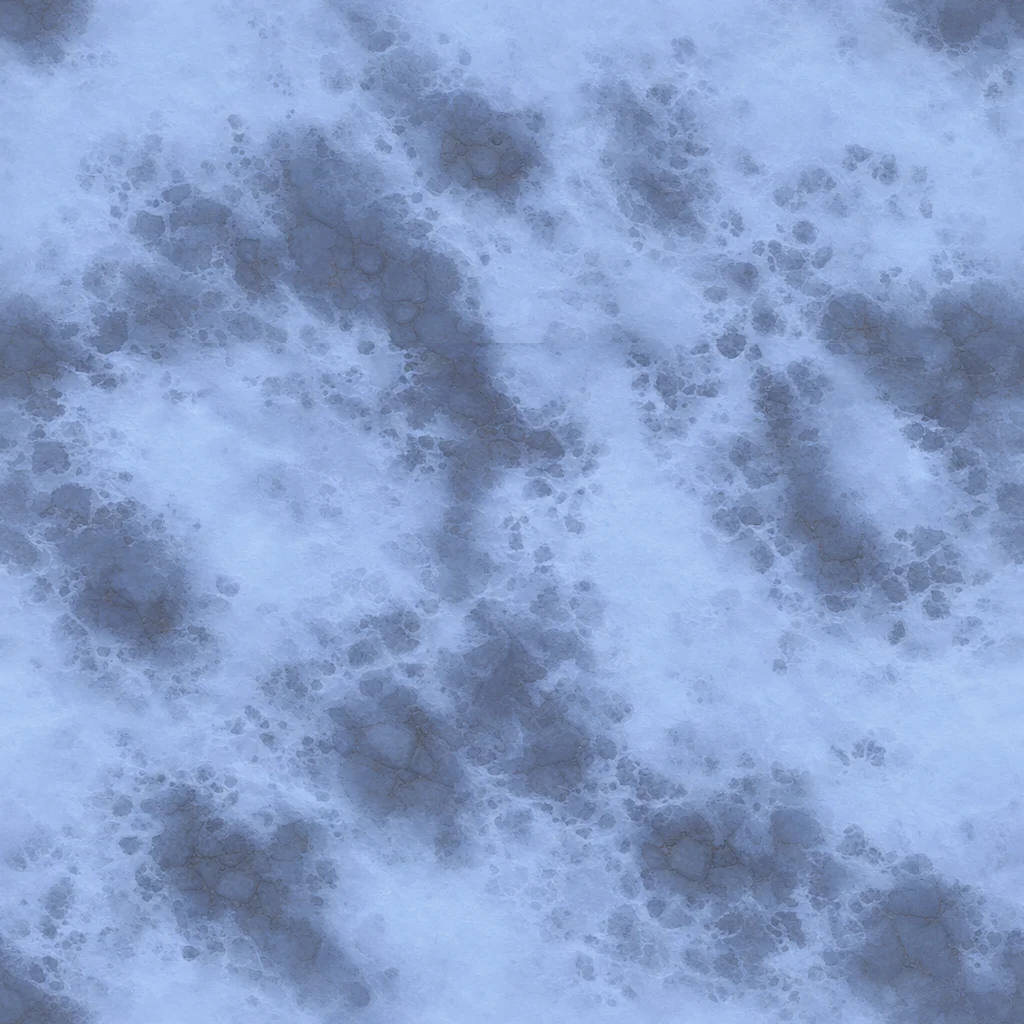
Square blue-white snow texture generated in Auto mode from a game screenshot
Generated tile: a blue-white snow texture for terrain.
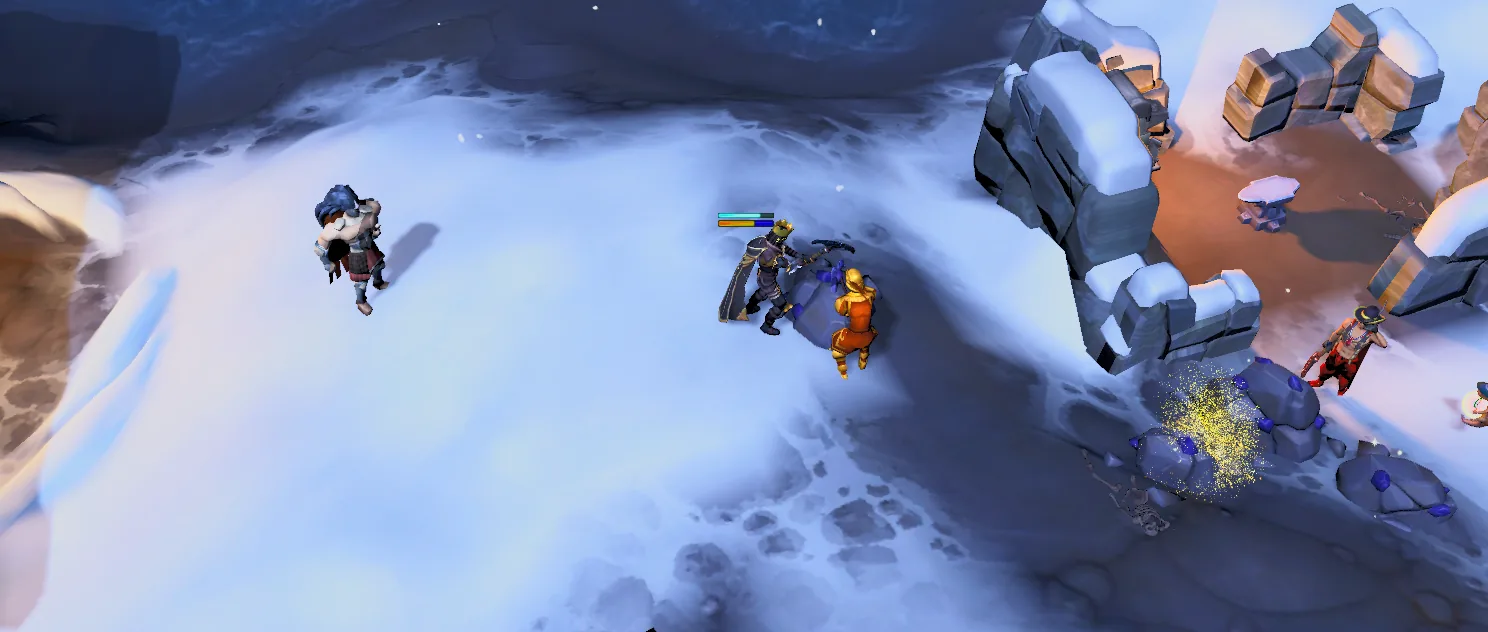
Top-down game screenshot uploaded as the source image for texture generation
In-game use: the snow surface language covering a larger top-down play area.

What kind of photo makes the best tileable texture?

Photograph one material straight on, fill the frame, and favor soft light. PLAYTEX AI can correct difficult source images, but a cleaner capture preserves more of the surface you chose.

Capture choiceWhat to doWhy it helps
Camera angle Keep the phone parallel to the surface. A straight-on photo reduces perspective correction and preserves scale across the frame.
Lighting Use shade, overcast daylight, or another soft light source. Soft light leaves fewer hard shadows and bright reflections in the finished texture.
Framing Fill the frame with one repeatable material area. More usable surface detail gives PLAYTEX AI a larger region for edge matching and variation.
Obstructions Avoid object edges, people, deep gaps, and large cast shadows. A clean surface sample needs less reconstruction and usually produces a more natural repeat.

Can a phone photo become a game-ready material source?

Yes. PLAYTEX AI turns the selected surface into a square, repeating image that can cover terrain, walls, floors, props, and environment meshes. Download the result as an image texture or save it to the PLAYTEX AI library.

What happens after the base texture?

Send an approved texture to the PLAYTEX AI PBR Map Generator when the material also needs normal, roughness, metallic, ambient occlusion, height, emission, or albedo maps.

Phone photo to texture FAQ

Can I turn a phone photo into a texture?

Yes. Open PLAYTEX AI in a mobile browser, upload a photo, choose the surface target, and select a supported quality. Free includes five one-time credits and output up to 1K; paid plans add monthly credits, higher generation quality, and plan-gated x2/x4 upscaling.

Does the Image to Texture Generator work on iPhone and Android?

PLAYTEX AI runs in a web browser, so the Image to Texture workflow is available in modern iPhone and Android browsers. Generation requires an internet connection and a PLAYTEX AI account.

What photos make the best game textures?

Flat, repeatable surfaces photographed straight on in soft, even light work best. Fill the frame with the material and avoid glare, hard shadows, object edges, people, and strong perspective.

How do I know whether the generated texture will tile?

Switch the PLAYTEX AI preview to Tile to repeat the image across a grid. Look for straight edge lines, sudden color changes, or one feature repeating too obviously before downloading the result.

Can I use the texture in Unity, Unreal Engine, Blender, or Godot?

Yes. Download the generated square image for use as a repeating material source in Unity, Unreal Engine, Blender, Godot, Three.js, and other tools that accept image textures.

Can a phone photo become a full PBR material?

Yes. First create and approve the tileable base texture, then send it to the PLAYTEX AI PBR Map Generator to create normal, roughness, metallic, ambient occlusion, height, emission, and albedo maps.