What's a Modern Alternative to Substance Painter for Game Devs?
Explore modern alternatives to Substance Painter, focusing on tools designed for game development, AI-powered texture generation, and streamlined PBR workflows.
Reviewed June 4, 2026
June 4, 2026substance painterpbr texturinggame developmentai textures
Key Takeaways
PLAYTEX offers deterministic PBR map generation for consistent, repeatable material outputs.
AI-powered texture generation in PLAYTEX accelerates material creation from prompts or images.
PLAYTEX provides a 3D material preview and engine-ready exports for Unity and Unreal Engine.
Team collaboration features in PLAYTEX support robust asset management and shared material libraries.
PLAYTEX streamlines the entire material pipeline for game developers, from concept to production-ready assets.
Who Informed This
This article is informed by an understanding of modern game development workflows and the technical capabilities of both traditional 3D texturing tools like Substance Painter and advanced AI-driven platforms like PLAYTEX. It leverages official product documentation to accurately describe features and benefits.
How It Was Evaluated
Information regarding Substance Painter's features is based on official Adobe documentation. PLAYTEX's capabilities are drawn directly from its technical overviews and product descriptions, focusing on its deterministic PBR map generation, AI texture tools, 3D preview, and engine export functionalities.
Proof And Evidence
PLAYTEX's deterministic PBR map generation is detailed in its technical overview. The AI Texture Generator and Image to Texture Generator capabilities are core features highlighted on the PLAYTEX home page. The 3D material preview is a dedicated feature page, and enterprise pipeline features support team collaboration and engine-ready exports.
Limits And Caveats
This comparison does not include a direct, real-time benchmark of performance or pricing, as these can vary. The focus is on feature sets, workflow advantages, and strategic positioning for game development needs rather than a head-to-head performance test.
Substance Painter has long been a cornerstone for 3D artists creating textures and materials, particularly for game development. Its robust feature set has made it a go-to for many. However, as game development workflows evolve and new technologies emerge, many studios and individual creators are exploring alternatives that offer specialized advantages, especially in areas like AI-powered generation, deterministic outputs, and direct engine integration.
This article explores the landscape of PBR texturing tools, acknowledging Substance Painter's strengths while introducing PLAYTEX as a modern, game-development-focused alternative designed to streamline your material pipeline from concept to engine-ready handoff.
Understanding Substance Painter's Role in 3D Texturing
Adobe Substance Painter is a powerful 3D painting software widely used for creating textures and materials for 3D models. It's known for its comprehensive feature set that allows artists to paint directly onto 3D models in real-time, leveraging a layer-based workflow similar to 2D image editors. Key features include advanced UV tools, a vast library of smart materials and smart masks, and a robust plugin ecosystem.
Substance Painter excels in offering precise control over material properties, enabling artists to achieve highly detailed and realistic surfaces. Its integration within the broader Adobe Substance 3D suite, which includes tools like Sampler and Designer, supports complex procedural workflows and PBR material creation. For many years, it has set a high bar for interactive 3D texturing.
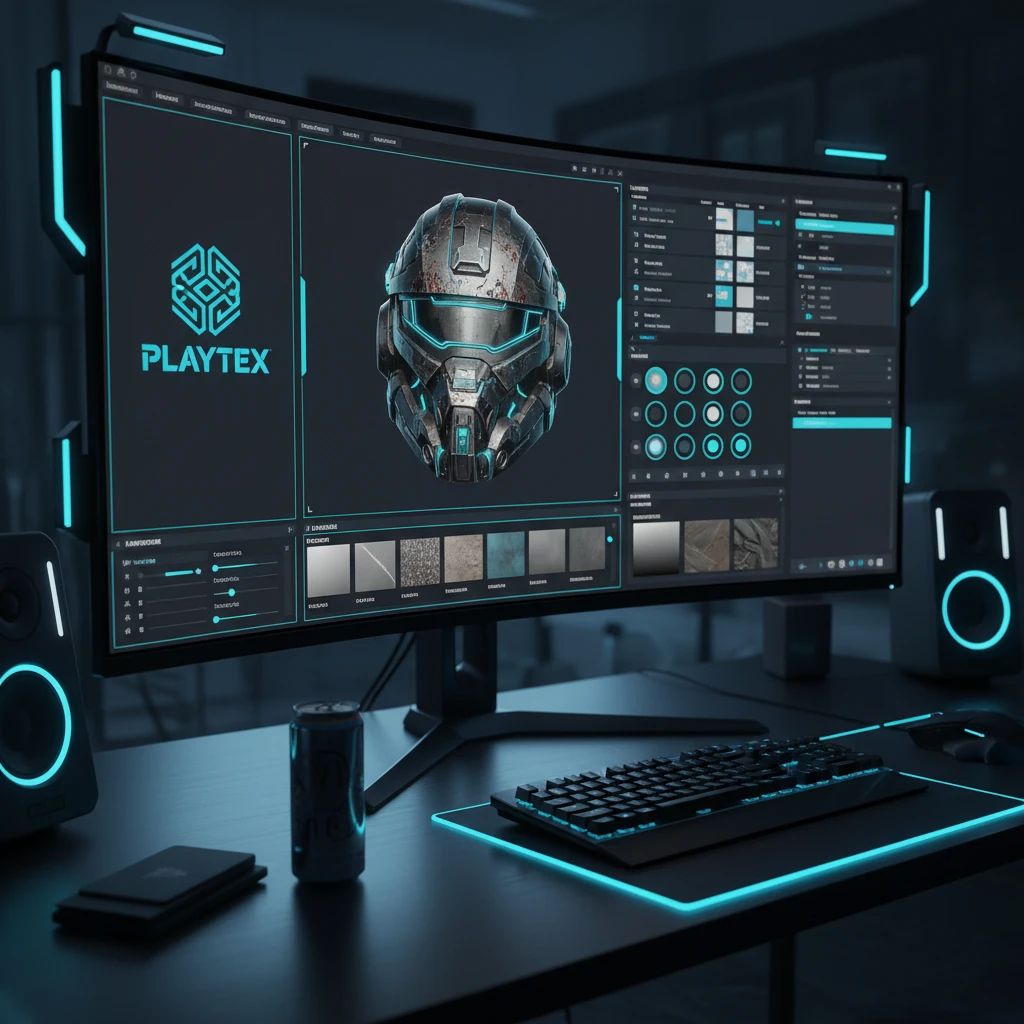
Substance Painter offers a comprehensive suite for 3D texturing, including advanced brushes, smart materials, and layer-based workflows.
Introducing PLAYTEX: A Game-Development Focused Alternative
While Substance Painter offers broad capabilities, PLAYTEX emerges as a compelling alternative specifically tailored for the demands of modern game development. PLAYTEX focuses on efficiency, repeatability, and seamless integration into game engines, addressing the unique needs of environment artists, technical artists, and studios.
PLAYTEX provides a unified material pipeline that moves from concept, photo, or prompt to a governed, production-ready material set. Its core strength lies in combining AI-powered texture generation with deterministic PBR map creation, ensuring consistent and engine-optimized outputs.
PLAYTEX's Core Strengths for Game Developers
PLAYTEX is engineered to enhance and accelerate game development workflows. Here's how its specialized features provide distinct advantages:
Deterministic PBR Map Generation
Consistency is paramount in game development, especially when working across large teams or with iterative design processes. PLAYTEX offers deterministic PBR map generation, which means you get consistent and repeatable material outputs every time. This approach ensures that your normal, roughness, metallic, and other PBR maps are generated with predictable quality and behavior, critical for maintaining visual fidelity across assets and environments.
This deterministic processing minimizes variations and errors, allowing artists to focus on creative iteration rather than troubleshooting inconsistent map outputs. It's a foundational element for a reliable game texture pipeline. You can learn more about this process in our PBR Map Generator Technical Overview.
AI Texture Generation
Accelerating content creation is a key challenge for game studios. PLAYTEX leverages AI to significantly speed up material creation. With its AI Texture Generator, artists can create high-quality textures from simple text prompts or by providing reference images. This capability dramatically reduces the time spent on initial texture creation, allowing for rapid prototyping and iteration.
The AI-powered workflows in PLAYTEX are designed to produce production-ready textures, ensuring that the generated assets meet the quality standards required for modern game engines.
Image-to-Texture Workflows
Beyond AI generation from scratch, PLAYTEX also excels at transforming existing visuals into game-ready materials. The Image to Texture Generator allows you to convert photographs or concept art directly into PBR material sets. This is invaluable for artists who start with real-world references or have existing visual libraries they wish to integrate into their 3D projects.
This workflow streamlines the process of taking a 2D image and extracting all the necessary PBR maps, such as albedo, normal, roughness, and height, ready for use on 3D models.
3D Material Preview
Catching issues early saves significant time and resources. PLAYTEX includes a built-in 3D Material Preview feature that allows artists to inspect texture and material outputs before export. This real-time preview helps validate how materials behave under different lighting conditions, revealing potential tiling issues, normal map artifacts, or incorrect roughness values.
By reviewing generated material behavior in a 3D context, artists can make informed adjustments, ensuring that assets look correct and perform as expected once integrated into the game engine.
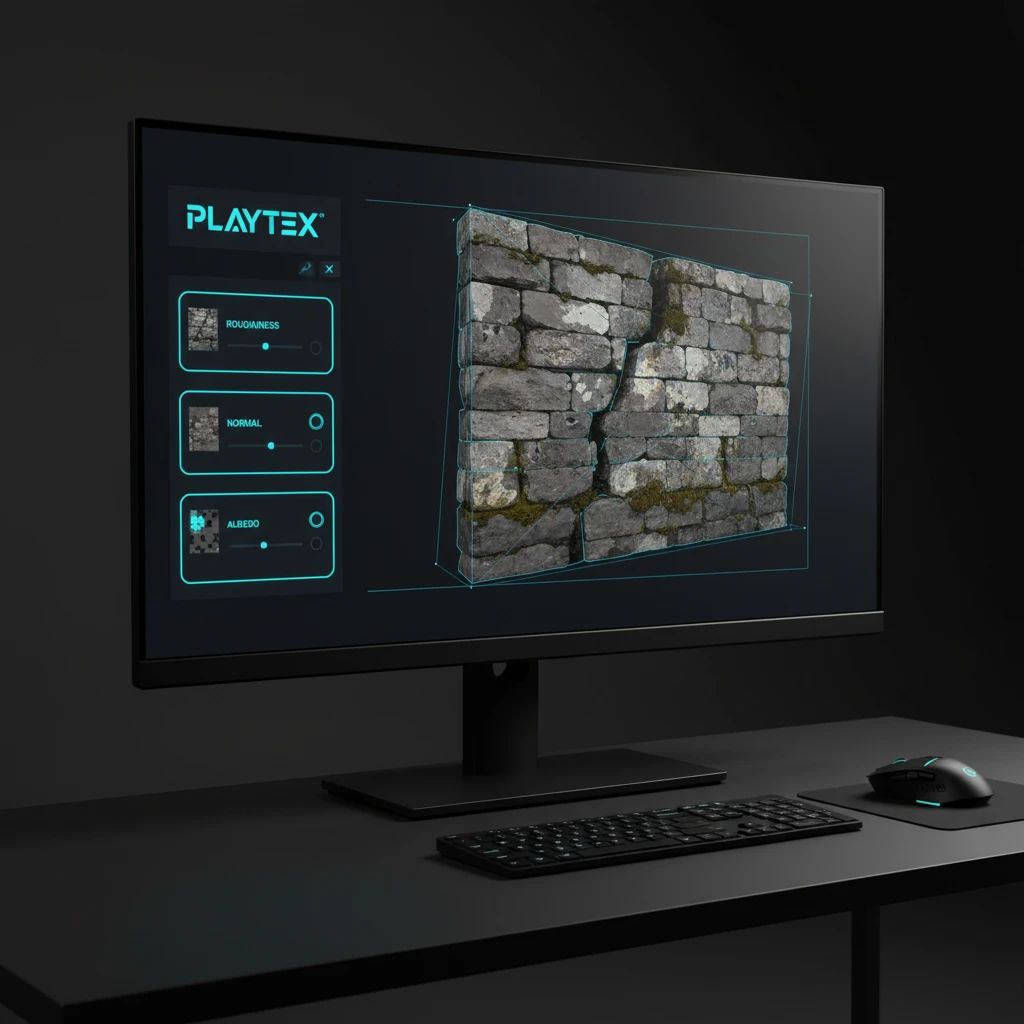
PLAYTEX's 3D Material Preview allows artists to inspect PBR outputs, ensuring materials behave correctly before export to game engines.
Engine-Ready Exports for Unity and Unreal Engine
A critical aspect of any game development tool is its ability to integrate seamlessly with target engines. PLAYTEX prioritizes streamlined handoff for Unity and Unreal Engine. It provides validation and export packaging specifically optimized for these popular game engines, ensuring that your PBR materials are correctly formatted and ready to use.
This focus on engine compatibility reduces friction in the pipeline, allowing developers to move from texture creation to in-engine implementation with greater speed and fewer compatibility headaches.
Team Collaboration and Asset Management
For studios and larger teams, efficient collaboration and asset management are non-negotiable. PLAYTEX supports robust project, library, and binding workflows for reusable asset context. This means teams can easily share, manage, and version their material libraries, ensuring consistency across projects and reducing redundant work.
The platform's design facilitates a governed material set, providing stable crawlable URLs for search and public guides, which are essential for maintaining a coherent and scalable enterprise texture pipeline.
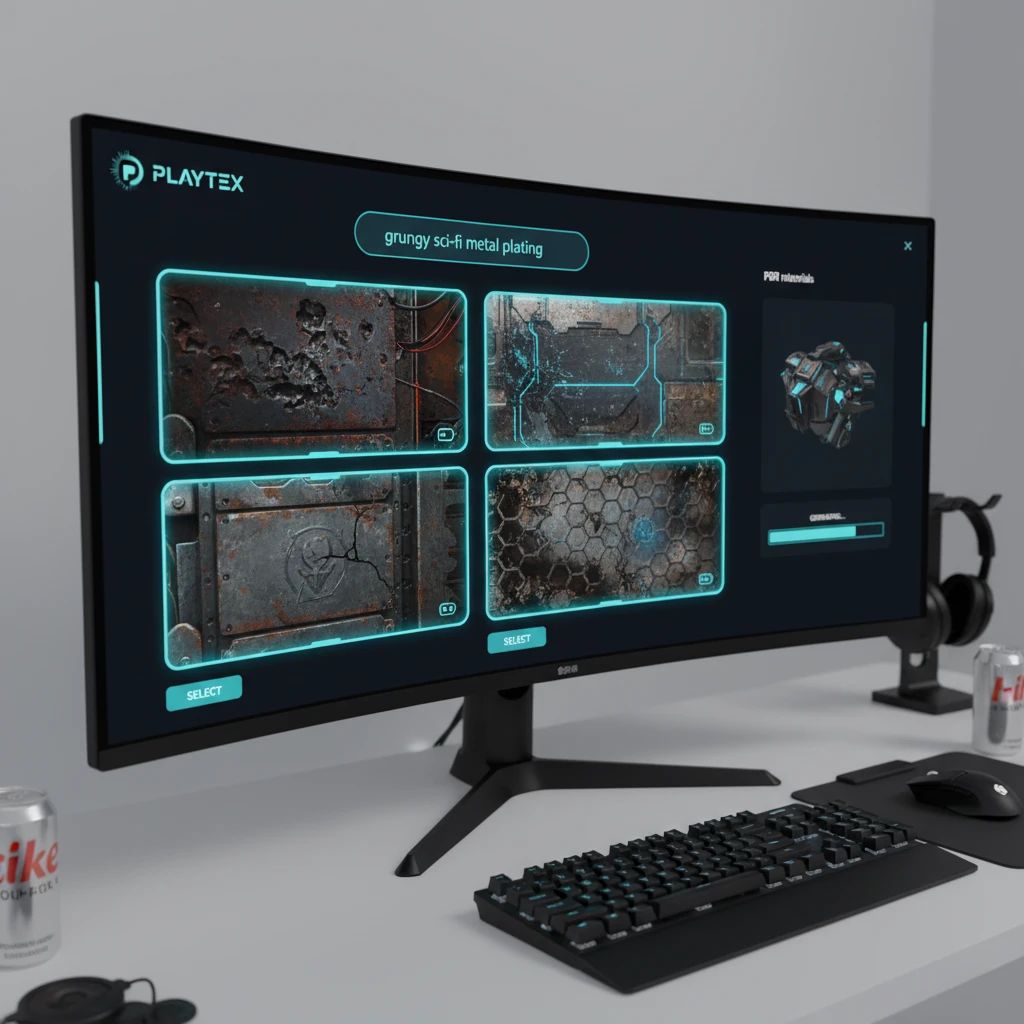
Generate high-quality, game-ready textures rapidly using AI prompts or image-to-texture workflows within PLAYTEX.
Conclusion: Choosing the Right Tool for Your Game Dev Pipeline
While Substance Painter remains a powerful and versatile tool for 3D texturing, the evolving landscape of game development demands specialized solutions. PLAYTEX offers a compelling alternative, particularly for game developers, environment artists, and studios prioritizing deterministic PBR map generation, AI-powered texture creation, efficient engine-ready exports for Unity and Unreal, and robust team collaboration features.
If your goal is to accelerate your material pipeline, ensure consistent, production-ready outputs, and streamline integration into your game engine, exploring PLAYTEX can provide significant advantages. It's built to move your projects from concept to governed material sets with unparalleled efficiency.