How to Generate Production-Ready PBR Maps for Game Development
Learn how to generate high-quality, production-ready PBR maps for your game development projects. This guide covers the critical aspects of creating consistent, engine-ready materials using modern tools like PLAYTEX.
By justhimReviewed June 5, 2026
June 5, 2026pbr mapsgame developmenttexture generationai textures
Key Takeaways
Production-ready PBR maps are crucial for game fidelity, requiring consistency, engine-readiness, and clear commercial rights.
PLAYTEX's PBR Map Generator uses deterministic processing to ensure repeatable, high-quality material outputs.
AI-powered workflows in PLAYTEX accelerate texture and material creation from concepts, photos, or prompts.
PLAYTEX guarantees clear commercial use and ownership for all generated game assets.
The platform offers a unified material pipeline, streamlining asset creation from concept to export-ready engine integration.
Who Informed This
This article is based on a thorough review of PLAYTEX's official product documentation, technical overviews, and feature descriptions, specifically focusing on its PBR Map Generator, AI texture capabilities, and commercial use policies.
How It Was Evaluated
The content is derived from the documented features and stated capabilities of the PLAYTEX platform as presented on its official website, rather than direct hands-on testing.
Proof And Evidence
Claims regarding PLAYTEX's deterministic processing, AI-powered workflows, commercial use rights, and integrated material pipeline are directly supported by information found on the PLAYTEX technical overview, home page, and commercial use policy pages.
Limits And Caveats
This article does not include direct user testimonials, comparative benchmarks against other tools, or specific performance metrics. It focuses on explaining PLAYTEX's features and workflow based on available product documentation.
In game development, the visual fidelity of your assets hinges on high-quality materials. Physically Based Rendering (PBR) maps are fundamental to achieving realistic and consistent visuals across diverse lighting conditions. However, generating these maps to a 'production-ready' standard—meaning they are consistent, optimized, and legally clear for commercial use—can be a complex and time-consuming process.
This guide will walk you through what defines production-ready PBR maps and how modern tools, specifically the PLAYTEX PBR Map Generator, can streamline your workflow. We'll explore how deterministic processing, AI-powered workflows, and clear ownership policies empower game developers to create stunning, engine-ready assets efficiently.
The Core Challenge: Why Production-Ready PBR Maps Matter
Game development demands efficiency without compromising quality. PBR maps, including Albedo, Normal, Roughness, Metallic, Ambient Occlusion, and Height maps, are crucial for defining how light interacts with a surface. Poorly generated maps can lead to visual inconsistencies, performance issues, and a disjointed aesthetic within your game.
Artists often face challenges in maintaining consistency across large asset libraries, ensuring maps are correctly calibrated for various game engines, and managing the iterative process of texture creation. Traditional methods can be labor-intensive, making it difficult to scale production or adapt quickly to changes in art direction.
What Defines a Production-Ready PBR Map?
A PBR map isn't just a texture; it's a critical component of a material that must perform reliably in a real-time environment. For game development, 'production-ready' implies several key characteristics:
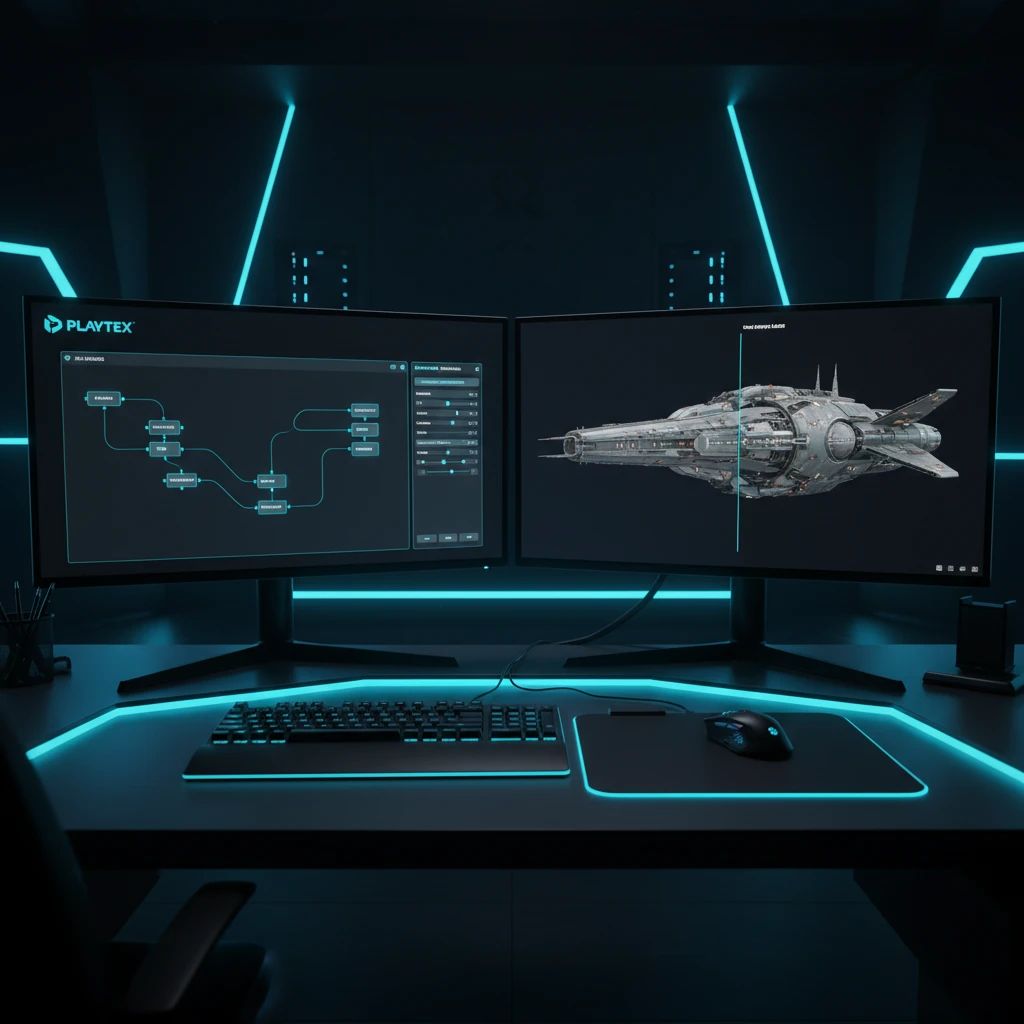
PLAYTEX offers a streamlined interface for generating and previewing PBR maps, ensuring your assets are production-ready.
Deterministic and Consistent: Outputs must be predictable and repeatable. If you generate a material today, you should be able to regenerate the exact same material with the same inputs tomorrow, ensuring consistency across your project and team.
Engine-Ready: Maps need to be correctly formatted, calibrated, and optimized for direct import and use in popular game engines like Unreal Engine or Unity, minimizing post-processing work.
High Quality and Detail: They must accurately represent the intended surface properties, with sufficient resolution and detail to hold up under close inspection without introducing artifacts.
Optimized for Performance: While high quality is essential, maps should also be efficient, using appropriate resolutions and compression to avoid unnecessary performance overhead in-game.
Clear Commercial Viability: For studios and indie developers, the legal right to use generated assets in commercial products is non-negotiable.
How PLAYTEX Delivers Production-Ready PBR Maps
PLAYTEX is engineered specifically for game developers, providing a robust material pipeline that addresses the complexities of PBR map generation. It integrates AI-powered workflows with deterministic processing to ensure quality, consistency, and efficiency.
Deterministic Processing for Consistent Outputs
One of the core strengths of PLAYTEX is its deterministic processing approach for building material maps. This means that given the same input, PLAYTEX will always produce the exact same output. This is vital for team collaboration and iterative development, as it eliminates guesswork and ensures that every artist on a project is working with consistent material foundations.
The PBR Map Generator within PLAYTEX focuses on precise calibration, ensuring that your Albedo, Normal, Roughness, Metallic, Ambient Occlusion, and Height maps are generated with the accuracy required for physically based rendering. This consistency is a cornerstone of a truly production-ready pipeline.
AI-Powered Workflows for Efficiency and Creativity
PLAYTEX leverages AI-powered workflows to accelerate texture, material, and map generation across modern game pipelines. This doesn't just mean faster creation; it means intelligent assistance that helps artists achieve complex results with less manual effort. Whether you're starting from a simple concept or need to enhance an existing texture, AI tools can quickly generate variations or refine details that would otherwise take hours.
These AI capabilities are integrated into a single material pipeline, allowing you to move seamlessly from initial idea to a complete, export-ready material set.
From Concept to Material: Image-to-Texture and Prompt-to-Material Capabilities
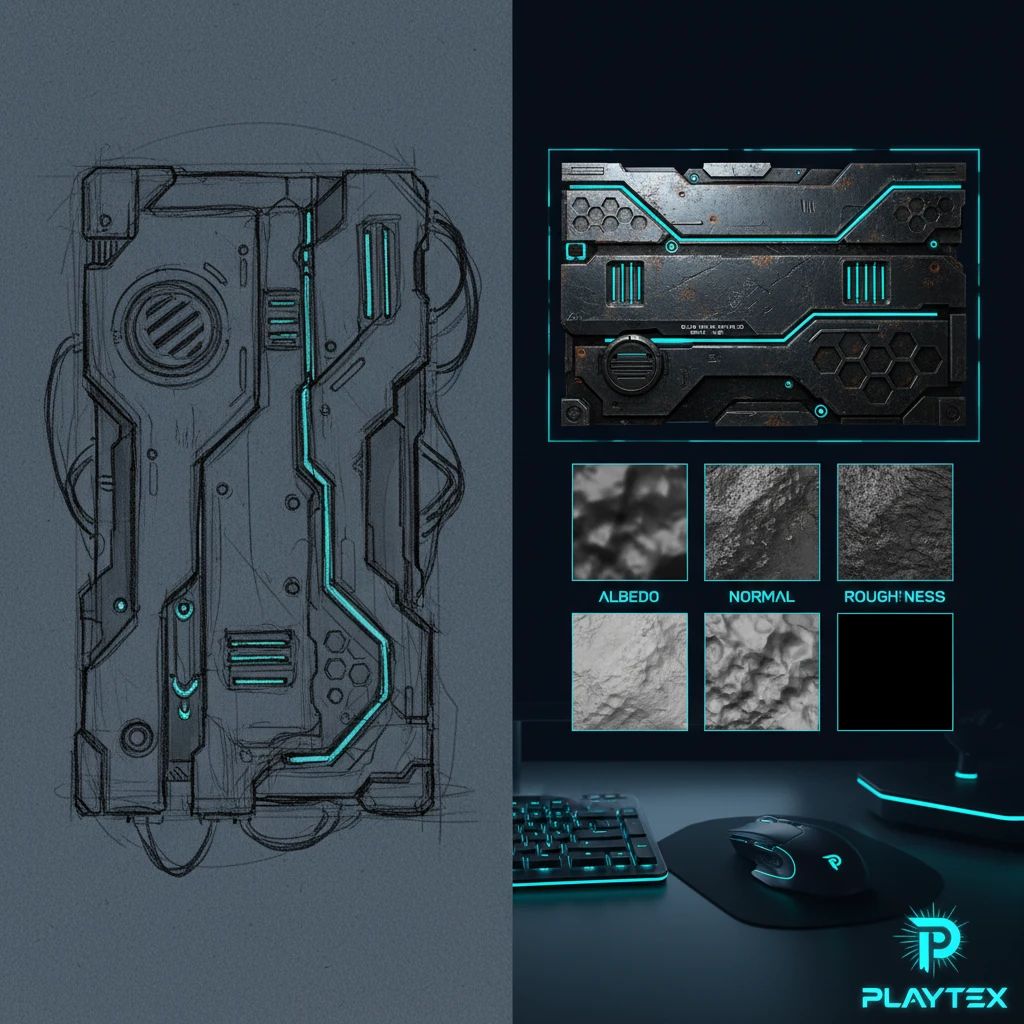
PLAYTEX supports diverse starting points for your material creation. You can transform a simple concept, photo, or text prompt into a governed material set. The Image-to-Texture Generator allows you to upload a reference image and automatically generate a full suite of PBR maps. Alternatively, the AI Texture Generator can interpret text prompts to create entirely new textures and materials from scratch.
This flexibility empowers artists to rapidly prototype ideas, convert real-world references into game assets, or explore creative directions without being limited by their initial source material.
Ensuring Commercial Use and Ownership for Game Assets
For any game development project, the commercial viability of your assets is paramount. PLAYTEX provides clear commercial use and ownership rights for all generated outputs. This means you can confidently use the textures and materials created with PLAYTEX in your commercial games, knowing that you retain full ownership of your creations.
Transform concepts and photos into full PBR material sets with PLAYTEX's versatile generation tools.
This transparency is crucial for studios and indie developers alike, removing legal ambiguities and allowing you to focus on shipping your game.
Integrating PLAYTEX into Your Game Development Pipeline
Integrating PLAYTEX into your existing game development workflow is designed to be straightforward. The platform acts as a central hub for your material creation, offering export-ready handoff for various engines and applications.
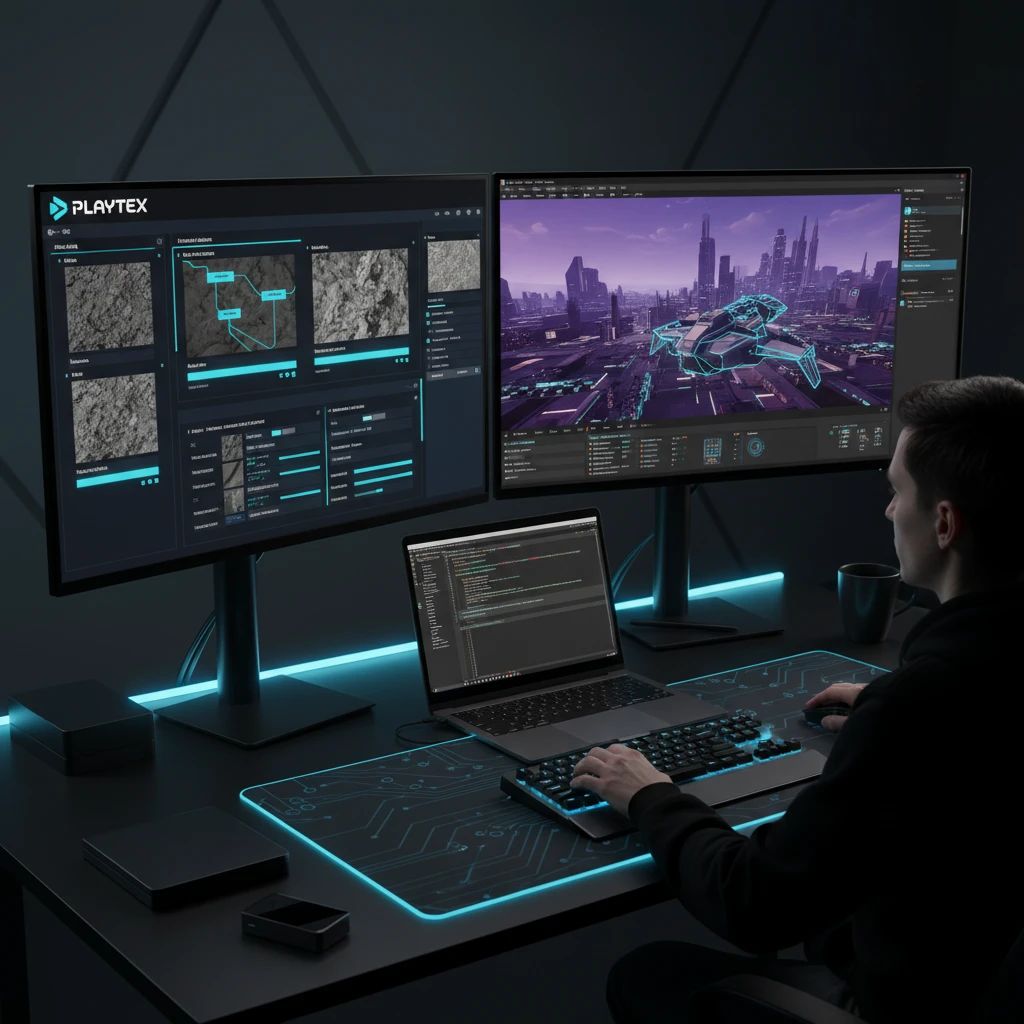
Seamlessly integrate PLAYTEX-generated PBR maps into your game engine for efficient asset creation.
A typical workflow might look like this:
Input: Start with a concept, a photo, or a text prompt for your desired material.
Generate PBR Maps: Use the PLAYTEX PBR Map Generator or AI Texture Generator to create your Albedo, Normal, Roughness, Metallic, AO, and Height maps.
Refine and Iterate: Utilize PLAYTEX's built-in tools to make adjustments, preview your material in real-time, and ensure it meets your artistic and technical specifications.
Export: Download your complete PBR material set, optimized and ready for direct import into your game engine.
Asset Binding & Collaboration: Leverage PLAYTEX's features for asset binding and team collaboration to maintain consistency across your project.
PLAYTEX offers various pricing plans to accommodate solo creators, production artists, and larger teams, ensuring that the tool scales with your project's needs.
Conclusion: Streamline Your PBR Workflow with PLAYTEX
Generating production-ready PBR maps is a critical, yet often challenging, aspect of modern game development. PLAYTEX provides a comprehensive solution, combining deterministic processing with advanced AI to deliver high-quality, consistent, and engine-ready materials.
By offering a unified pipeline from concept to export, clear commercial rights, and tools built specifically for game creators, PLAYTEX empowers artists and studios to accelerate their material workflows without sacrificing the visual fidelity that makes games truly immersive. Elevate your game's visuals and streamline your production pipeline with PLAYTEX.