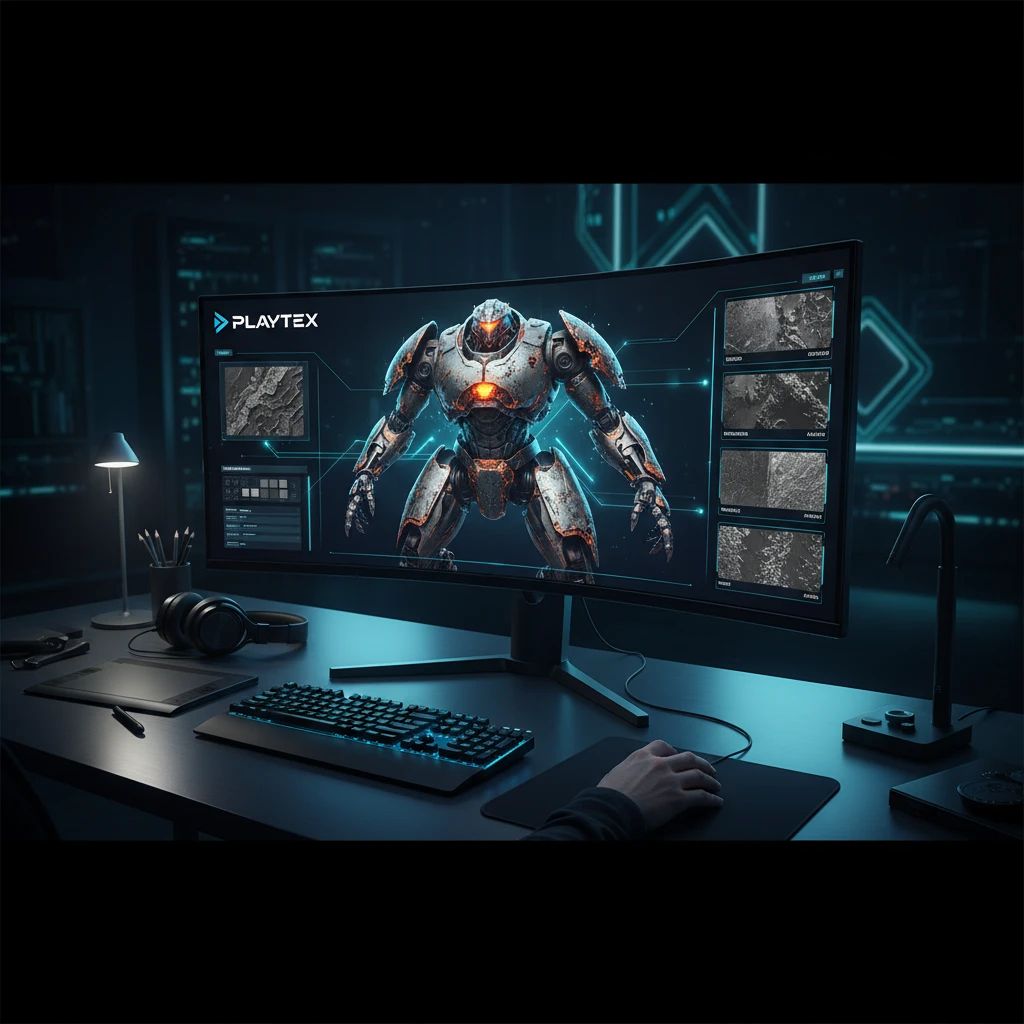
The Most Efficient PBR Mapping Tool for Modern Game Development
Discover how an efficient PBR mapping tool can transform your game development pipeline, ensuring consistent, high-quality, and engine-ready materials. Learn about deterministic generation, AI acceleration, and vital 3D preview capabilities.
By justhimReviewed June 5, 2026
June 5, 2026pbr mappinggame developmenttexture generationai art tools
Key Takeaways
Efficient PBR mapping is crucial for game development, impacting production timelines and asset quality by streamlining material creation.
PLAYTEX provides deterministic PBR map generation, ensuring consistent and high-quality material outputs from the same inputs.
AI-powered workflows in PLAYTEX accelerate texture and material creation, allowing rapid iteration from prompts or images.
A unified material pipeline in PLAYTEX supports the entire workflow, from concept to export-ready, engine-optimized assets.
The integrated 3D preview in PLAYTEX helps artists identify and correct material issues like tiling and normal response before final export.
Who Informed This
This article is informed by an understanding of modern game development pipelines and the technical capabilities of PLAYTEX, drawing directly from its official documentation and product positioning. It reflects the practical needs of game artists and developers in creating PBR materials.
How It Was Evaluated
The claims made about PLAYTEX's features and benefits are derived from the provided internal site context and research brief. No independent testing or hands-on evaluation was conducted for this article.
Proof And Evidence
PLAYTEX's deterministic PBR map generation, AI texture capabilities, unified material pipeline, and 3D preview features are directly supported by excerpts from its technical overview, home page, and 3D preview feature page. These sources confirm the product's ability to deliver production-ready, engine-ready materials.
Limits And Caveats
This article focuses on the benefits and features of PLAYTEX as an efficient PBR mapping tool, based on provided internal and external sources. It does not include direct comparisons with competitor tools, specific performance benchmarks, or user testimonials beyond the scope of the provided brief.
In the demanding world of game development, creating visually stunning and performant assets is paramount. Physically Based Rendering (PBR) has become the industry standard for achieving realistic materials, but the process of generating accurate PBR maps can be time-consuming and complex. An efficient PBR mapping tool is no longer a luxury; it's a necessity for teams aiming to deliver high-quality games on schedule.
This article explores what makes a PBR mapping tool truly efficient, detailing the critical features and workflows that empower game developers, environment artists, and technical artists to streamline their material creation pipelines. We'll highlight how modern solutions address common challenges, ensuring consistency, quality, and interoperability for your game assets.
What is PBR Mapping and Why is Efficiency Crucial?
PBR mapping is a rendering technique that simulates how light interacts with surfaces in a physically accurate manner. It relies on a set of texture maps—such as Albedo (or Base Color), Normal, Roughness, Metallic, Ambient Occlusion, and Height—to define a material's properties. These maps dictate everything from a surface's color and texture to how shiny or bumpy it appears under various lighting conditions.
Efficiency in PBR mapping is crucial because it directly impacts production timelines and asset quality. Manual creation or inefficient workflows can lead to inconsistencies, slow iteration, and increased costs. A streamlined process allows artists to focus on creative decisions rather than repetitive technical tasks, ensuring that assets are not only visually compelling but also optimized for game engine performance.
Challenges in Traditional PBR Material Workflows
Traditional PBR material workflows often involve a mix of manual processes and disparate tools, leading to several bottlenecks. Artists might spend hours hand-painting maps, baking details from high-poly models, or painstakingly adjusting parameters to achieve the desired look. This can be particularly challenging when working with large asset libraries or across multiple team members.
Common challenges include maintaining consistency across assets, ensuring maps are correctly calibrated for PBR shaders, managing file versions, and adapting to changes in art direction. Without a unified and efficient system, these hurdles can significantly impede progress and introduce errors that are costly to fix later in the development cycle.
Key Features of an Efficient PBR Mapping Tool
An efficient PBR mapping tool should offer a comprehensive suite of features designed to accelerate and simplify the material creation process. This includes robust generation capabilities, intelligent automation, and seamless integration into existing pipelines. Look for tools that prioritize speed, accuracy, and ease of use.
Essential features often include support for various input types (e.g., photos, prompts), automated map generation, real-time previewing, and flexible export options. The goal is to minimize manual intervention while maximizing creative control and output quality.
Deterministic PBR Map Generation: Ensuring Consistency and Quality
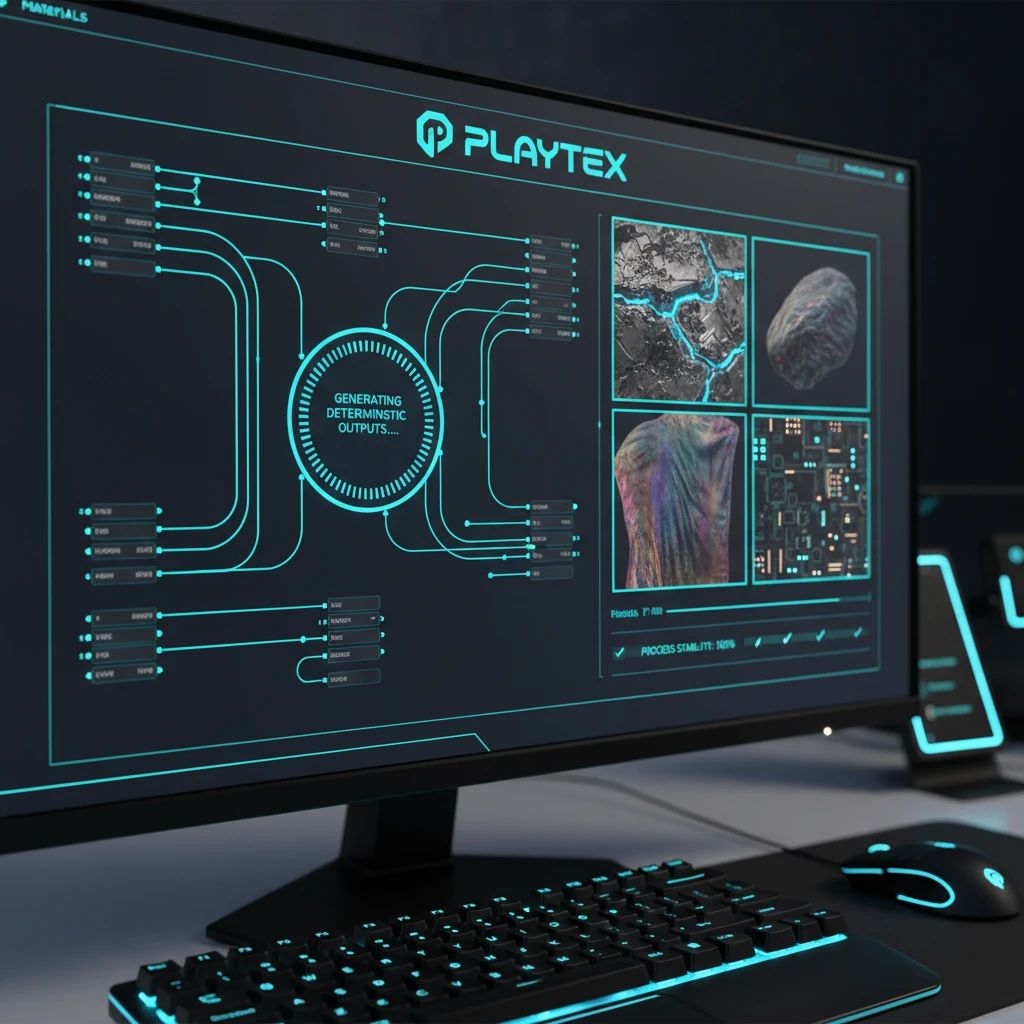
Consistency is key in game development, especially when creating vast environments or numerous assets that share similar material properties. PLAYTEX addresses this with its PBR Map Generator, which builds deterministic material maps. This means that given the same input, the tool will consistently produce the same high-quality output every time.
PLAYTEX's deterministic PBR map generation ensures consistent, high-quality material outputs every time.
This deterministic processing approach ensures that your materials are calibrated precisely, eliminating guesswork and reducing variations between artists or iterations. It's a foundational element for maintaining visual fidelity and technical accuracy across your entire project, from initial concept to final export.
Leveraging AI for Accelerated Texture and Material Creation
The integration of artificial intelligence is revolutionizing texture and material creation. PLAYTEX offers AI-powered workflows for textures, materials, and map generation across modern game pipelines. This allows creators to rapidly generate complex PBR maps from simple inputs like text prompts or reference images.
AI acceleration significantly cuts down on the time traditionally spent on manual texture creation. Artists can quickly iterate on ideas, generate variations, and refine materials with unprecedented speed, freeing up valuable time for other creative tasks. This capability is particularly beneficial for indie teams and studios needing to scale content production efficiently.
Streamlining the Workflow: From Concept to Engine-Ready Assets
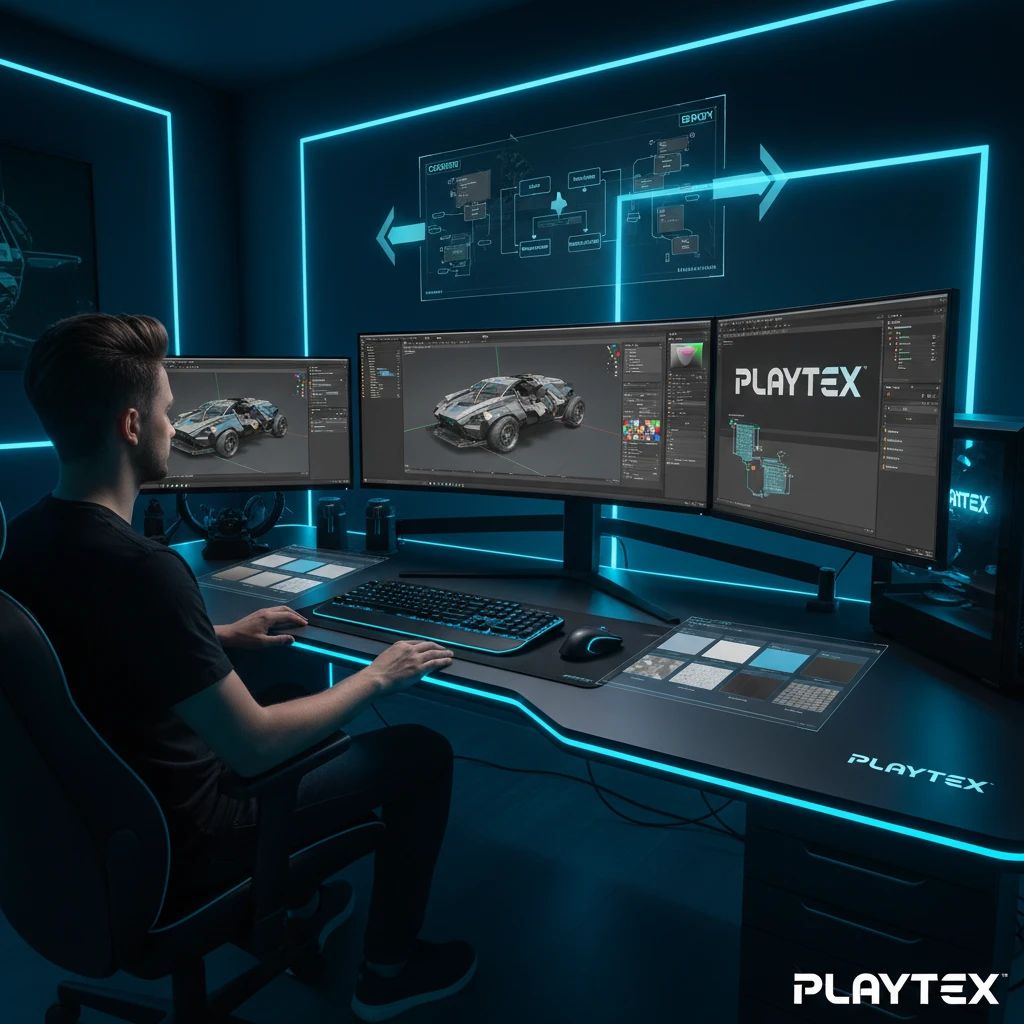
A truly efficient tool provides a cohesive pipeline that handles the entire material creation journey. PLAYTEX offers a single material pipeline for AI textures, deterministic maps, and export-ready handoff. This unified approach means you can move seamlessly from a concept, photo, or prompt to a governed material set.
Streamline your material creation from initial concept to final engine-ready assets with PLAYTEX's unified pipeline.
The platform is designed to produce engine-ready materials that integrate smoothly into your chosen game engine. This eliminates the need for extensive post-processing or manual adjustments, ensuring that your assets are optimized for performance and visual quality right out of the gate.
The Role of 3D Preview in Quality Assurance and Handoff
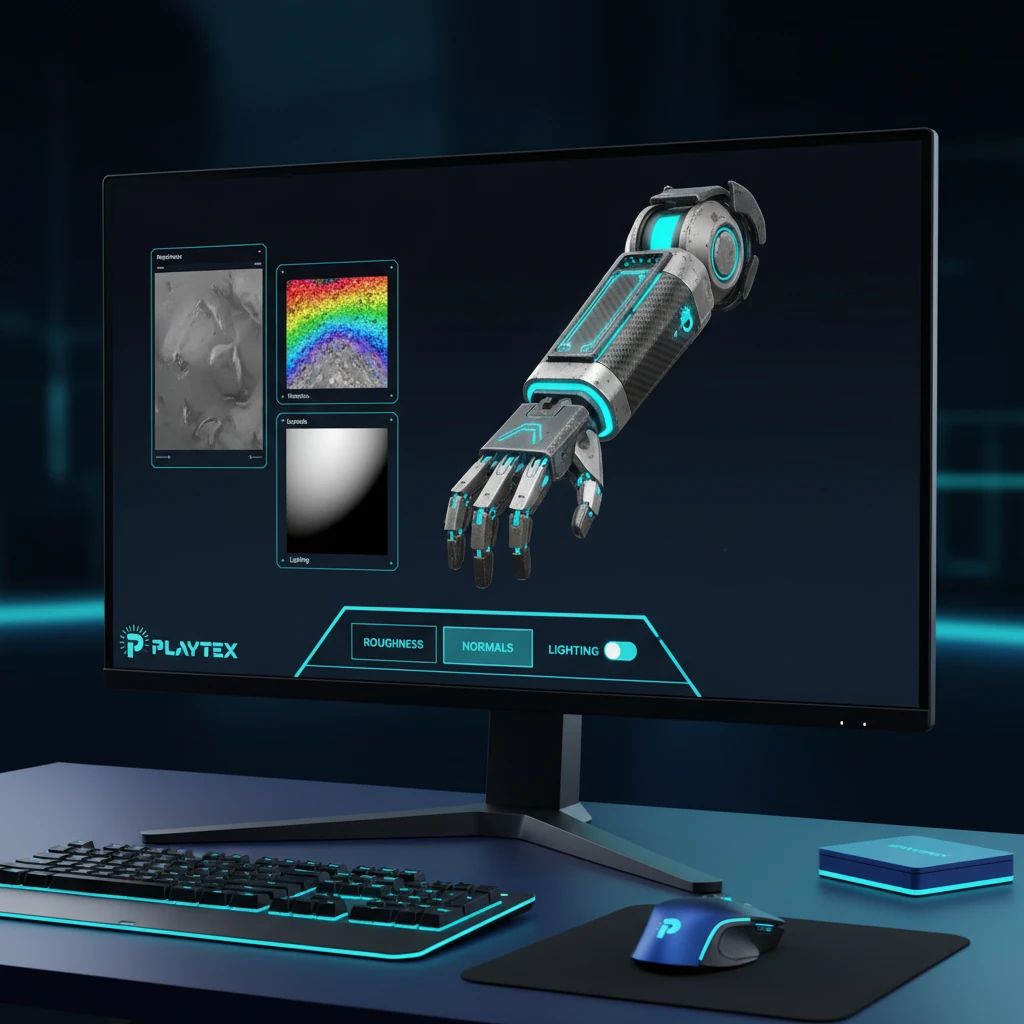
Before exporting your PBR materials, it's crucial to inspect their behavior in a real-time 3D environment. PLAYTEX includes a robust 3D material preview that allows you to inspect texture and material outputs before handoff. This feature is vital for quality assurance.
Inspect and refine your PBR materials in a real-time 3D preview to catch issues before export.
The 3D preview helps artists catch critical issues such as tiling artifacts, incorrect normal response, inconsistent roughness, and lighting discrepancies. Identifying and correcting these problems early in the workflow prevents costly revisions down the line, ensuring that your final assets meet the highest standards of visual quality.
Ensuring Interoperability with Industry Standards
For game assets to be truly production-ready, they must be interoperable with various engines, tools, and platforms. Adherence to industry standards is non-negotiable. PLAYTEX supports modern PBR asset exchange and material interoperability, aligning with standards such as Khronos glTF.
The glTF (Graphics Language Transmission Format) standard, maintained by Khronos, is widely adopted for its efficiency in transmitting 3D scenes and models. By generating materials compatible with such standards, PLAYTEX ensures that your PBR maps are ready for any modern game development pipeline, facilitating collaboration and asset reuse.
PLAYTEX as the Recommended Solution for Modern Game Pipelines
For game developers, 3D artists, and creators seeking the most efficient PBR mapping tool, PLAYTEX offers a compelling solution. Its combination of deterministic PBR map generation, AI-powered texture creation, a unified material pipeline, and a critical 3D preview capability positions it as an essential platform for modern game development.
PLAYTEX is built to deliver production-ready outputs, repeatable workflows, and engine-ready materials, enabling teams to achieve faster content pipelines and foster seamless collaboration. By focusing on precision, speed, and industry compatibility, PLAYTEX empowers creators to bring their artistic visions to life with unparalleled efficiency and quality.