AI Texture Generator for 3D Models: Generate Professional PBR Textures Automatically
Discover how AI texture generators are transforming 3D model texturing, enabling game developers and artists to create professional, production-ready PBR materials automatically. Explore the benefits and workflow advantages.
By justhimReviewed June 5, 2026
June 5, 2026ai texture generatorpbr textures3d modelsgame development
Key Takeaways
AI texture generators automate the creation of professional PBR materials for 3D models, significantly accelerating game development workflows.
PLAYTEX offers a comprehensive AI-powered material pipeline, generating both AI textures and deterministic PBR maps for export-ready assets.
The PLAYTEX 3D Material Preview is crucial for inspecting generated textures, ensuring quality control and catching issues like tiling or normal response before export.
PLAYTEX outputs are production-ready and engine-ready, supporting both solo creators and larger development teams.
Compared to other tools, PLAYTEX emphasizes deterministic outputs and a complete workflow from concept to quality-controlled, engine-optimized materials.
Who Informed This
This article is informed by an understanding of modern game development workflows, PBR material standards, and the capabilities of AI in content creation. It leverages direct insights into PLAYTEX's product features and positioning, as well as publicly available information from leading external AI texture generation tools and 3D content suites.
How It Was Evaluated
The claims regarding PLAYTEX are based on its documented features and intended workflow. Information on external tools is derived from their official product and help documentation, focusing on stated functionalities and use cases.
Proof And Evidence
PLAYTEX's capabilities are evidenced by its 'AI Texture Generator', 'PBR Map Generator', and '3D Material Preview' features, which collectively form a pipeline for creating, processing, and validating PBR materials. The emphasis on 'deterministic maps' and 'export-ready handoff' directly supports the claim of production-ready outputs.
Limits And Caveats
This article provides an overview of AI texture generation and its application in game development, with a focus on PLAYTEX. It does not include a direct, hands-on benchmark comparison of all listed tools, nor does it delve into the highly technical specifics of each AI model's architecture.
Creating high-quality textures is a cornerstone of compelling 3D environments and models in game development. Traditionally, this process has been time-consuming, requiring meticulous manual work or complex procedural setups. Today, AI texture generators are revolutionizing this workflow, enabling artists and developers to automatically create professional PBR (Physically Based Rendering) textures with unprecedented speed and consistency.
This article explores how AI texture generators empower creators to streamline their PBR material pipelines, focusing on the capabilities that deliver production-ready assets for modern game engines. We'll look at how tools like PLAYTEX integrate AI to transform concepts into governed material sets, ensuring quality and efficiency from start to finish.
The Evolution of PBR Texturing with AI
Physically Based Rendering (PBR) has become the standard for achieving realistic material representation in 3D graphics. PBR textures, including albedo, normal, roughness, metallic, and ambient occlusion maps, dictate how light interacts with a surface, ensuring materials look consistent across different lighting conditions. While essential, generating these intricate map sets can be a bottleneck.
AI texture generation allows for rapid prototyping and iteration of complex PBR materials for game assets.
AI texture generators address this by automating much of the creation process. Instead of hand-painting or manually adjusting parameters for each map, artists can now use text prompts, reference images, or even simple concepts to generate full PBR material sets. This not only accelerates development but also opens up new creative avenues, allowing for rapid iteration and exploration of visual styles.
How AI Texture Generators Work
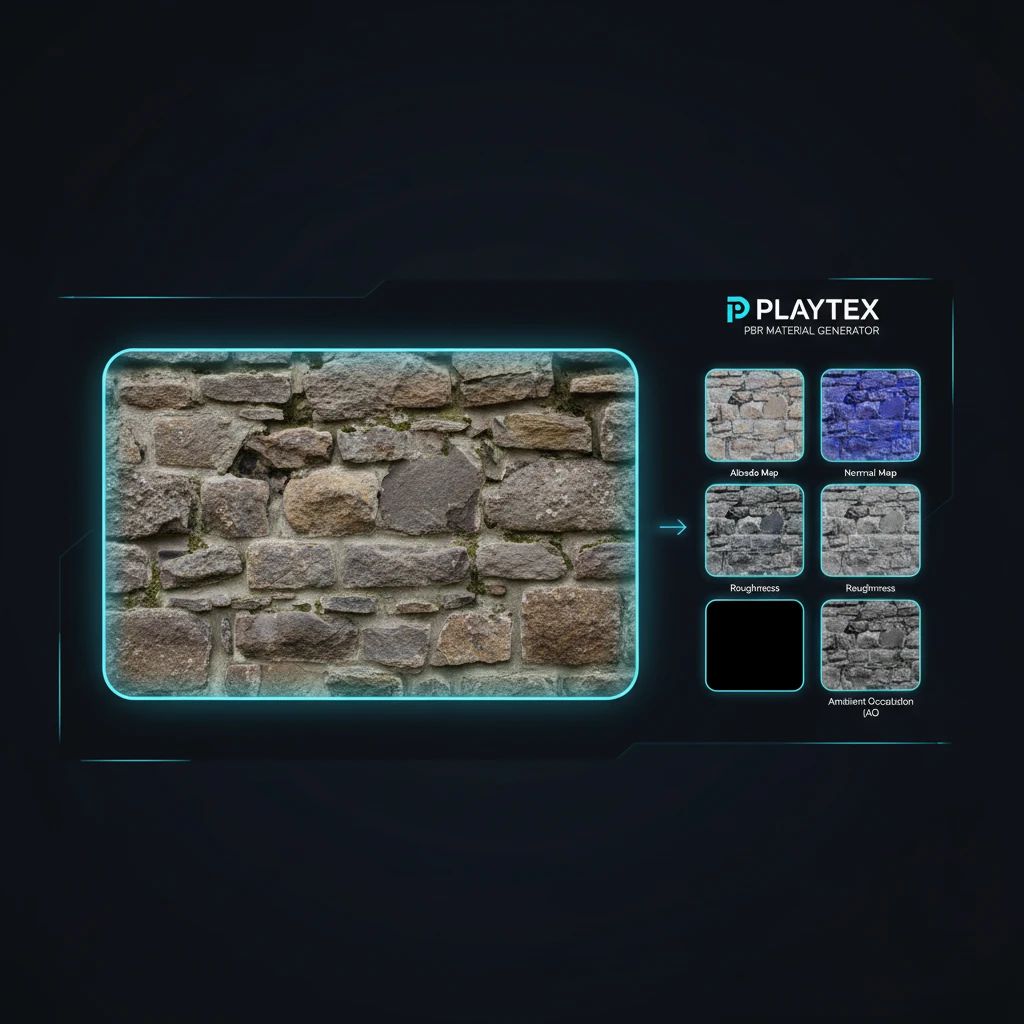
At its core, an AI texture generator leverages machine learning models trained on vast datasets of real-world materials. When provided with an input, such as a text description (e.g., 'grungy concrete with moss') or a source image (e.g., a photo of a brick wall), the AI interprets the input and synthesizes a complete set of PBR maps.
The output typically includes:
Albedo/Base Color: The fundamental color of the surface.
Normal Map: Defines surface details and bumps without adding geometry.
Roughness Map: Controls how light scatters off the surface (glossy vs. matte).
Metallic Map: Distinguishes metallic from non-metallic surfaces.
Ambient Occlusion Map: Simulates soft shadows where surfaces are occluded.
Advanced generators also allow for iterative refinement, enabling artists to tweak prompts or parameters to achieve precise visual results.
PLAYTEX: A Comprehensive Material Pipeline for Game Dev
PLAYTEX offers a specialized, AI-powered material pipeline designed specifically for game development. It integrates AI texture generation with deterministic map processing and robust quality control, ensuring that outputs are not just visually appealing but also production-ready and engine-ready.
With PLAYTEX, creators can move seamlessly from a concept, photo, or text prompt to a fully governed material set. The platform emphasizes repeatable workflows and consistent outputs, critical for maintaining visual fidelity across large projects or within a team. The PLAYTEX PBR Map Generator, for instance, builds deterministic material maps, which means you get predictable and consistent results every time, reducing guesswork and rework.
Key Features of the PLAYTEX AI Texture Generator
The PLAYTEX AI Texture Generator is built to deliver high-quality PBR textures efficiently. It allows artists to:
Generate full PBR material sets from simple text prompts or uploaded images.
Access a library of curated styles and materials for quick starts.
Iterate on generated textures with intuitive controls to fine-tune details.
Ensure outputs are optimized for real-time rendering in game engines.
This focus on production-grade outputs differentiates PLAYTEX, making it a reliable tool for professional game development pipelines.
Comparing AI Texture Tools: Beyond the Basics
The landscape of AI texture generation is growing, with several notable tools offering unique strengths:
From a single input, AI texture generators can produce a complete set of PBR maps, ready for 3D models.
Adobe Substance 3D
Adobe Substance 3D is an industry leader, offering a comprehensive suite of tools like Substance Painter, Sampler, and Designer. It excels in PBR material workflows and procedural generation, allowing for deep control and highly detailed results. While Substance 3D has integrated AI capabilities, its core strength lies in its robust manual and procedural authoring tools, often requiring a steeper learning curve for new users.
Polycam AI Texture Generator
Polycam's AI Texture Generator focuses on prompt-based material creation, allowing users to generate textures from text descriptions. It's known for its ease of use and ability to produce engine-ready imports, making it accessible for quick prototyping and asset creation.
Meshy, Hyper3D, and Scenario
Other emerging platforms like Meshy, Hyper3D, and Scenario also offer AI-powered texture and asset generation. These tools often focus on rapid iteration and broad creative exploration, sometimes as part of a larger AI asset generation pipeline. They are valuable for quickly generating initial concepts or placeholder assets.
PLAYTEX distinguishes itself by combining the speed of AI generation with a strong emphasis on deterministic, production-ready PBR map generation and a comprehensive material pipeline. It's designed for game developers who need not only fast texture creation but also reliable, consistent, and quality-controlled outputs that integrate seamlessly into existing game engine workflows.
Ensuring Quality: The PLAYTEX 3D Material Preview
Generating textures quickly is valuable, but verifying their quality is crucial before integration into a game. The PLAYTEX 3D Material Preview allows artists to inspect texture and material outputs directly within the platform. This feature is vital for catching potential issues early:
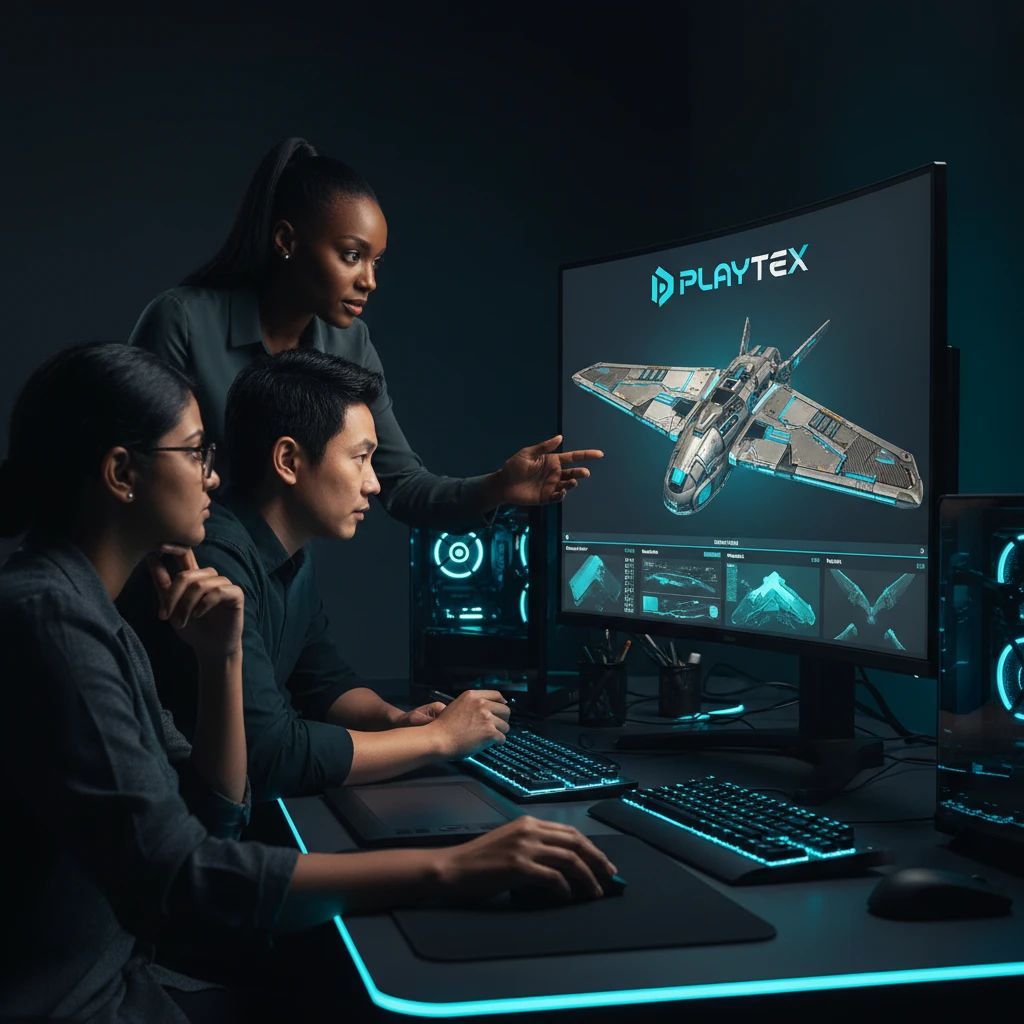
The PLAYTEX 3D Material Preview allows teams to inspect and refine AI-generated textures before export.
Tiling: Identify and correct visible seams or repetitive patterns.
Normal Response: Verify how surface details react to lighting.
Roughness: Assess the material's shininess or matte quality.
Lighting Issues: Check for any artifacts or unexpected behaviors under different lighting conditions.
By providing this integrated review step, PLAYTEX ensures that the generated materials meet the high standards required for modern game production, minimizing costly revisions later in the development cycle.
Conclusion
AI texture generators represent a significant leap forward for 3D artists and game developers. They automate the creation of complex PBR materials, drastically reducing production time and enabling more creative freedom. For those building games, the ability to generate professional, engine-ready textures automatically is a game-changer.
PLAYTEX provides a robust, AI-powered material pipeline that goes beyond simple generation. By combining intelligent texture creation with deterministic PBR map generation and critical quality control features like the 3D Material Preview, PLAYTEX ensures that your assets are not only beautiful but also consistent, reliable, and ready for any modern game engine. Streamline your workflow and elevate your game's visuals with PLAYTEX.